• About
  • Contact
  • Orders / Pedidos
  • Press

One Day Café

~ good eats from a small kitchen

One Day Café

Category Archives: argentina

Recipe: Cilantro Chimichurri

30 Monday Jul 2012

Posted by Anonymous in appetizers and sides, buenos aires, entrees, recipes

≈ Comments Off on Recipe: Cilantro Chimichurri

Tags

asado, chimichurri, cilantro, grilling

Asado is a staple of Argentine culture and cooking. The word loosely translates to the English word barbecue; it can be an actual event or it can refer to the food. There’s no limit to the types and cuts of meat that can be piled on the parrilla for an asado.

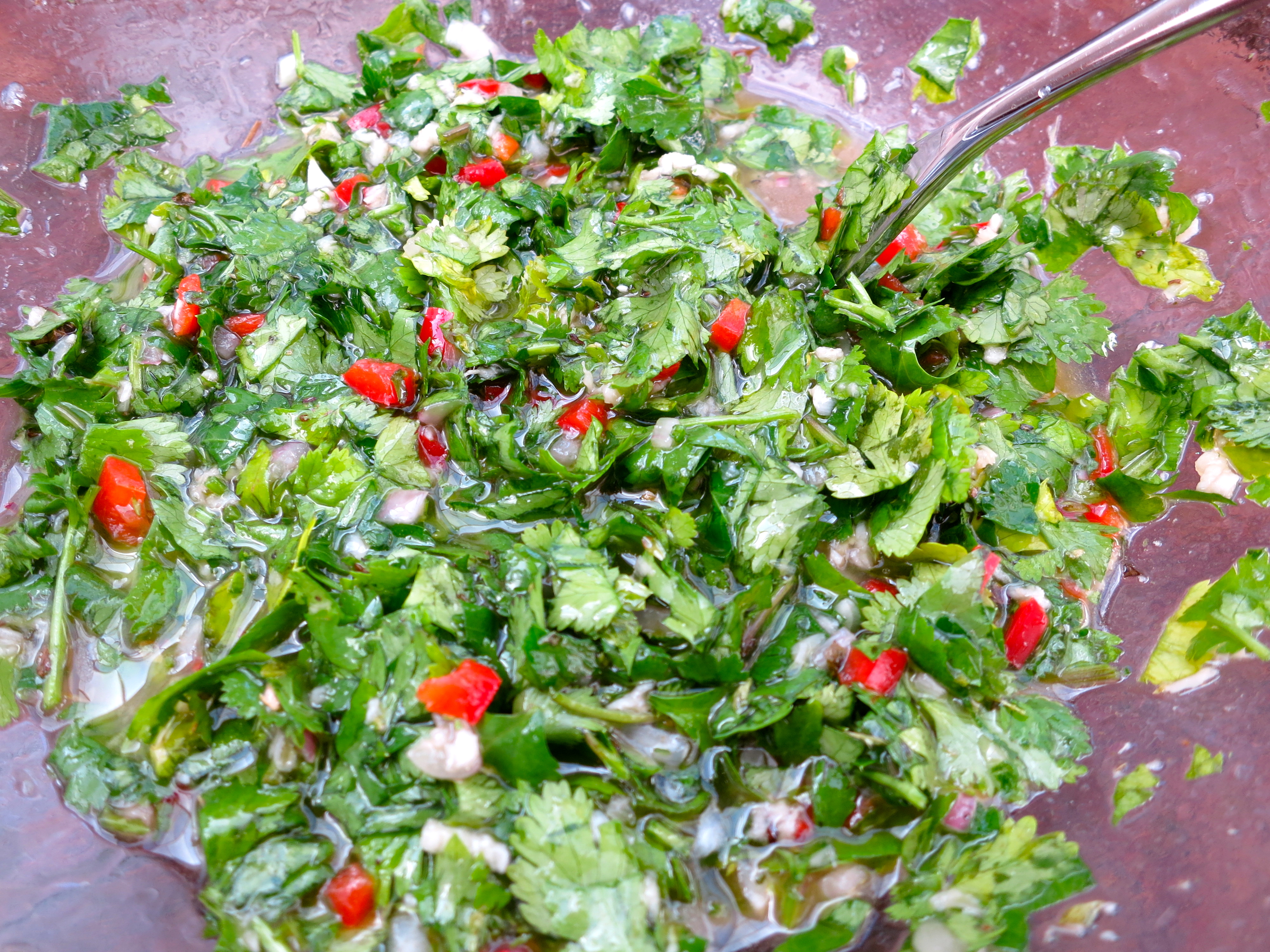
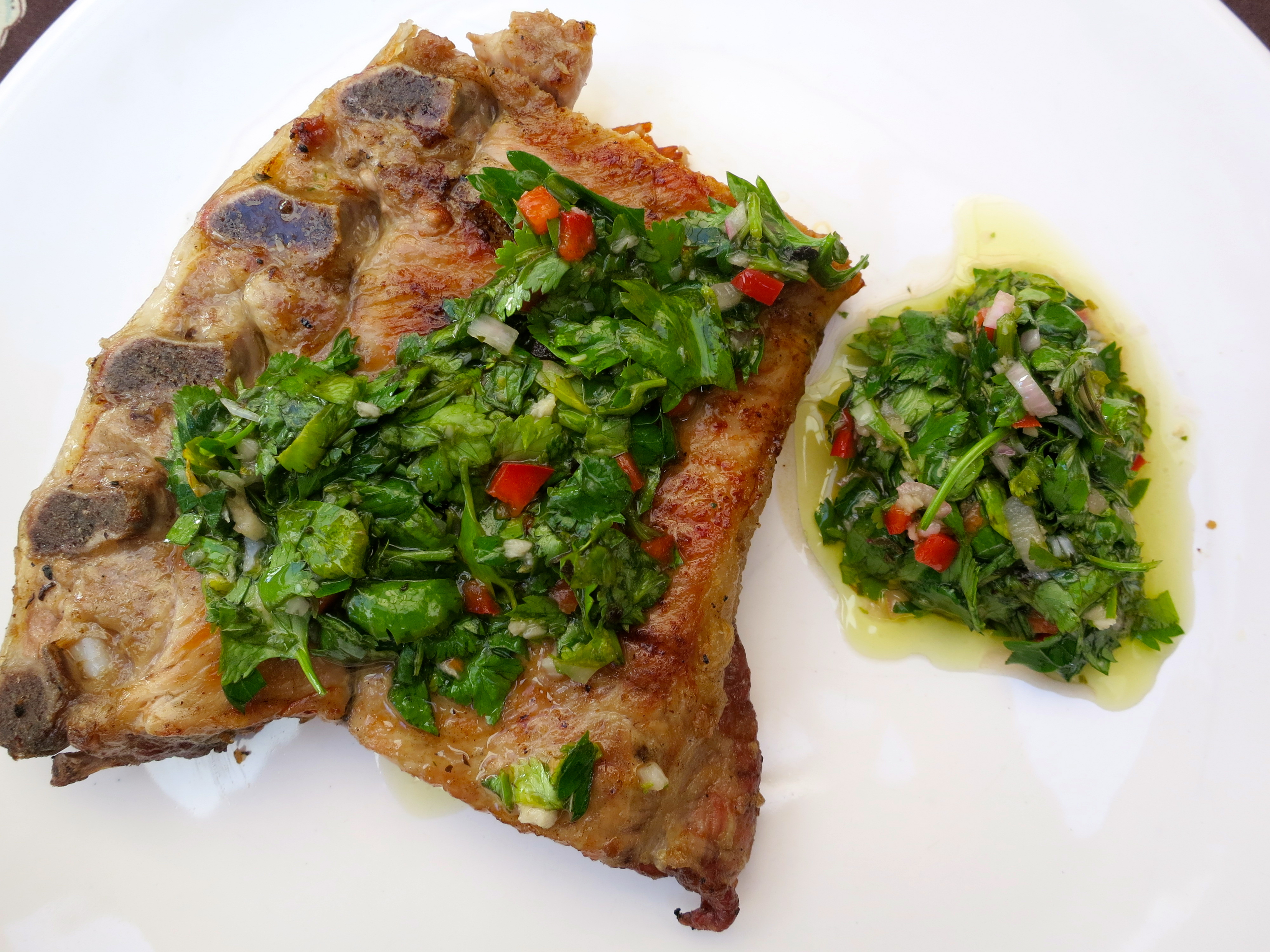
Just like its North American brethren, no asado would be complete without condiments. The most common in Argentina would have to be chimichurri, a sauce typically made of chopped parsley, garlic, oregano, olive oil and vinegar. I’d had chimichurri before at Argentinian steakhouses in the USA and was never really bowled over. But then I tried the chimichurri at a hole-in-the-wall parrilla serving choripan in San Telmo. The greasy, murky jar with the little plastic spoon may not have been so visually appealing, but that ish was delish. I had to make some at home.

Because I love cilantro, this version includes it, and is also heavy on the garlic. It’s amazing how such simple ingredients can come together so deliciously.

Chimichurri can also be used as a marinade before grilling, and I’ve found this recipe complements steak, pork and chicken. It’s definitely best with grilled meats, but I’ve used it with braised meat as well and have even mixed it with cooked quinoa for a tasty side dish.

This recipe is adapted from one in Bon Appétit.

CILANTRO CHIMICHURRI

1/2 cup red wine vinegar

1 tsp. sea salt

5 garlic cloves, minced

1 shallot, finely chopped

1 red jalapeño, finely chopped

2 cups chopped fresh cilantro

1 cup chopped parsley

2 T. dried oregano (or 1/3 fresh, chopped)

1/2 cup olive oil

Combine vinegar, 1 tsp. salt, garlic, shallot and chile in a medium bowl and let stand for at least 10 minutes. Stir in cilantro, parsley, and oregano. Using a fork, whisk in oil. If using as a marinade, reserve at least a 1/2 cup of the chimichurri, sprinkle with salt to taste, and use later as a sauce. For the marinade, put meat in a glass, stainless steel or ceramic dish and toss with remaining chimichurri. Cover and chill for at least 3 hours or overnight before grilling.

Garrapiñada, My Favorite Street Treat

26 Thursday Jul 2012

Posted by Anonymous in buenos aires

≈ 1 Comment

Tags

buenos aires street food, garrapiñada

Sundays in San Telmo are a noisy, crowded affair with the Feria de San Telmo in full swing. We happen to live on the street where the fair is held, which comes with its own set of pros and cons.

PRO: We have easy access to the antiques and handmade goods that 10,000 tourists from around the world descend upon San Telmo to browse.

CON: 10,000 tourists from around the world descend upon San Telmo.

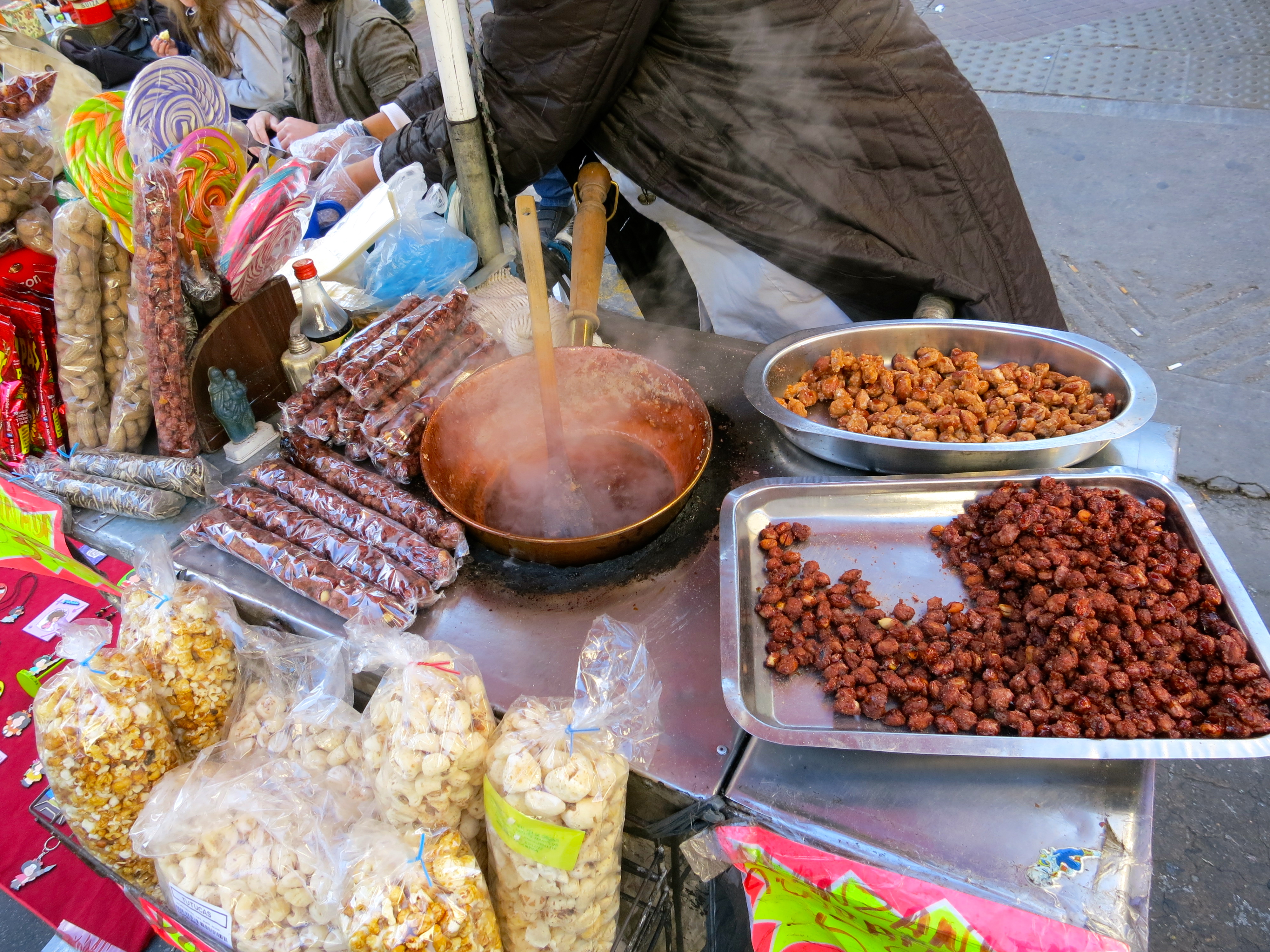
While I could do without hearing the same tango classic played outside my window repeatedly by street performers each Sunday, I still throw those windows open to bask in the heavenly smell of garrapiñada. Street carts hawking this delicious treat can be found on any day of the week, but they’re out in droves in San Telmo on Sundays and vanilla deliciousness is in the air.

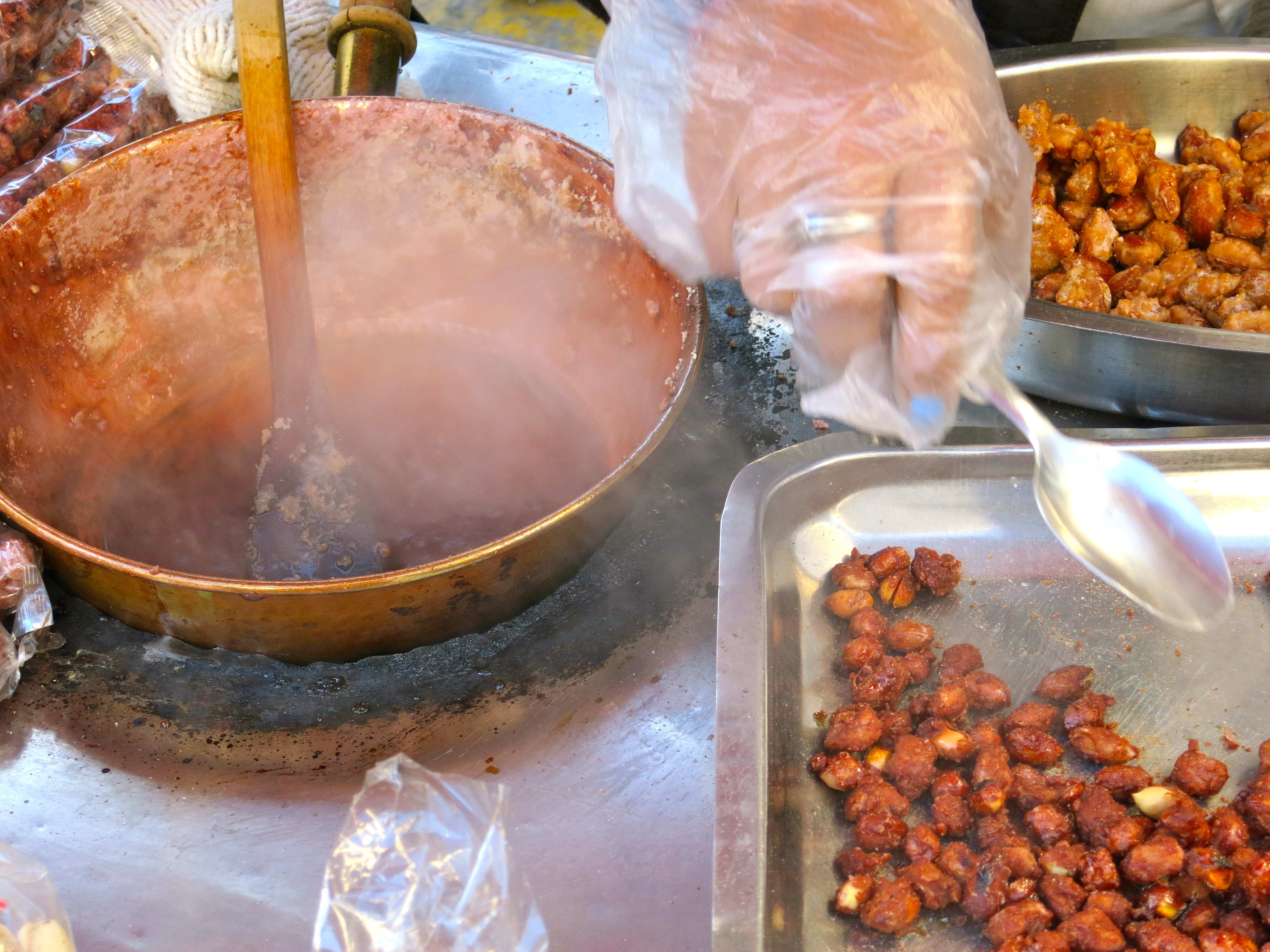
Garrapiñada is made with peanuts, sugar and vanilla, cooked until caramelized. The crunchy candied nuts are a common sight in Argentina and Uruguay. Most of the vendors in Buenos Aires also make it with almonds, my personal favorite variety. A small plastic packet generally runs between $2 and $5 pesos, depending how touristy the area is. Vale la pena, either way.

Garrapiñada: mani (peanuts) on the left, almendras (almonds) on the right.

The stuff’s amazing on its own. But last Thanksgiving, after searching high and low for pecans without any luck, I topped my sweet potato casserole with garrapiñada and I’m not quite sure I can ever go back. Now that I know where to find pecans, I’m thinking homemade pecan garrapiñada topping will make an appearance this year. Stay tuned…

¿Cómo se dice…? Fruits and Veggies

23 Monday Jul 2012

Posted by Anonymous in buenos aires, tips & how to's

≈ 5 Comments

Tags

Buenos Aires, castellano, english & spanish fruit & vegetable translations, fruits, vegetables

When you love to cook, moving to a country where you don’t speak the language can turn what used to be a simple trip to the grocery store into utter agony. Even after a year, many hundreds of hours of Spanish lessons and daily trips to the mercado, I still do a lot of pointing and asking, “¿Qué es esto?“.

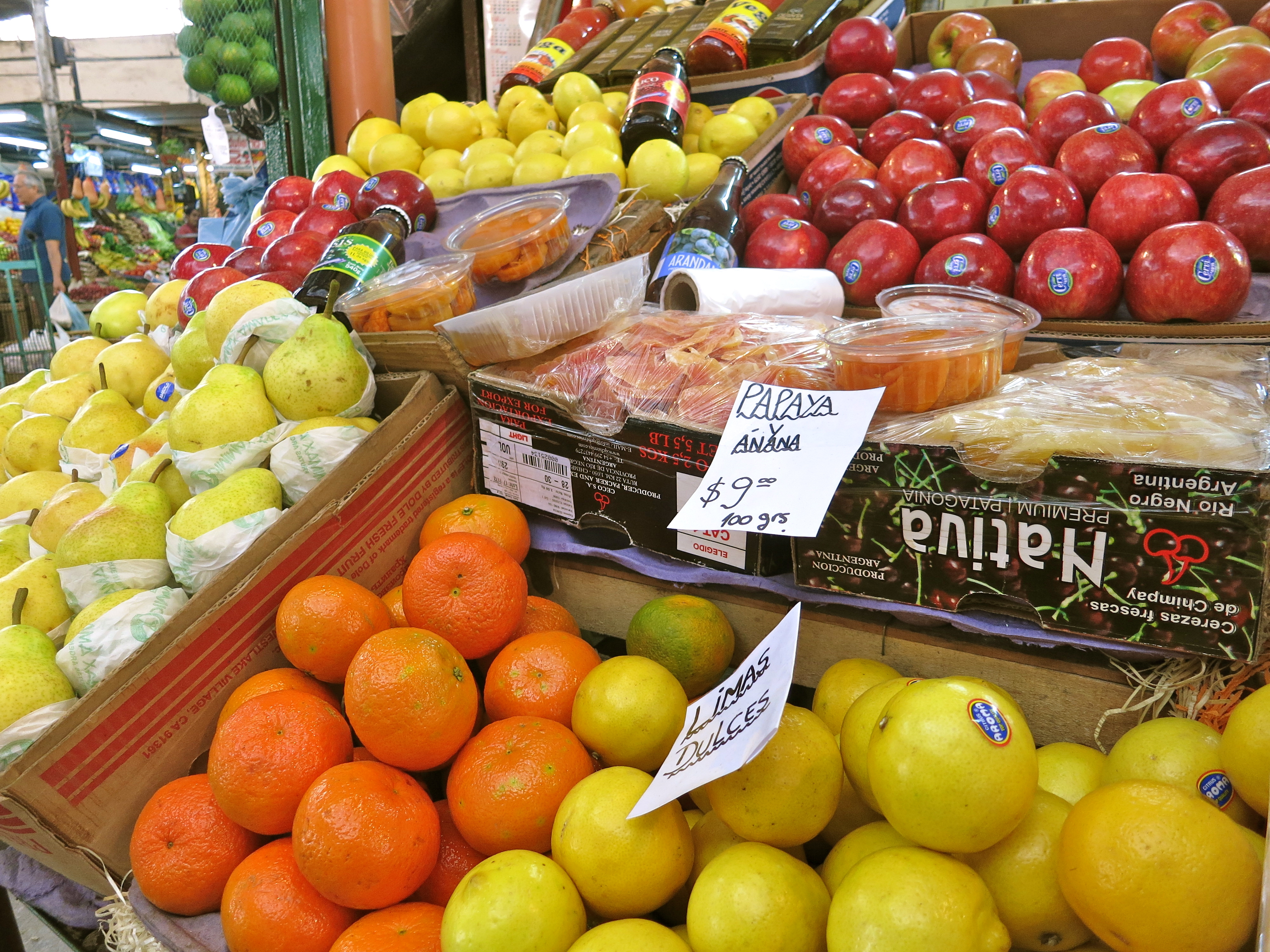
The fact that different Spanish-speaking countries have different names for the same items also complicates things in my brain. You think you’re shopping for aguacates and fresas? Oh noooo, my friend, those are paltas and frutillas in castellano rioplatense. So for any new arrivals or those who are just starting to venture out to the verdulerias, here’s a list of some of the most common fruits, vegetables and herbs you may be attempting to purchase and their corresponding names in the region. For a complete list of kitchen and cooking terminology, check out NOLA Chef’s Kitchen Dictionary.

FRUITS, VEGETABLES & HERBS IN  ENGLISH & SPANISH / FRUTAS, VEGETALES & HIERBAS EN INGLÉS Y CASTELLANO

apple: la manzana

artichoke: el alcaucil

arugula: la rúcula

asparagus: los espárragos

avocado: la palta

banana: la banana

basil: la albahaca

bay leaves: las hojas de laurel

beans: las chauchas

beets: las remolachas

blueberry: el arándano

bok choy: el bok choy

broccoli: el brócoli

brussels sprouts: los repollitos de bruselas

cabbage: el repollo

cabbage (Napa): el repollo japonés

capers: las alcaparras

carrots: la zanahoria

cauliflower: la coliflor

celery: el apio

cherry: la cereza

chickpeas: los garbanzos

cilantro: el cilantro

coconut: el coco

corn: el choclo

cucumber: el pepino

dates: los dátiles

eggplant: la berenjena

endive: la endivia

fig: el higo

garlic: el ajo

ginger: el jengibre

grapefruit: el pomelo

grapes: las uvas

kiwi: el kiwi

leek: el puerro

lemon: el limón

lentils: las lentejas

lettuce: la lechuga

lime: la lima

mango: el mango

mint: la menta

mushrooms: los champiñones, los hongos

onion: la cebolla

onion (red): la cebolla morada

orange: la naranja

orange (mandarine): la mandarina

oregano: el orégano

parsley: el perejil

passion fruit: la maracuyá

peach: el durazno

pear: la pera

peas: las arvejas

pepper (bell varieties: green, red, yellow): el morrón (verde, rojo, amarillo)

pineapple: el ananá

plantain: el plátano

plum: la ciruela

pomegranate: la granada

potato: la papa

pumpkin: la calabaza (also means squash)

prune: la ciruela pasa

radish: el rábano

raspberry: la frambuesa

rosemary: el romero

rhubarb: el ruibarbo

sage: la salvia

shallots: los chalotes

spinach: la espinaca

squash: la calabaza (also means pumpkin)

strawberry: la frutilla

sweet potato: la batata

thyme: el tomillo

tomato (normal): el tomate redondo

tomato (Roma or plum): el tomate perita

tomato (cherry or grape): el tomate cherry

turnip: el nabo

watermelon: la sandía

zucchini (round): zapallito redondo

Okay, what am I missing? What am I saying wrong while the friendly verduleros just humor me? Where did I get the artículos incorrect? Your additions, suggestions and corrections are invited and welcome. Happy healthy shopping!

There’s No Substitute for Good Chocolate. Or Is There?

19 Thursday Jul 2012

Posted by Anonymous in buenos aires, tips & how to's

≈ 4 Comments

Tags

cocoa powder in Buenos Aires, substitutes for unsweetened chocolate, substituting bittersweet chocolate for unsweetened, unsweetened chocolate in Buenos Aires

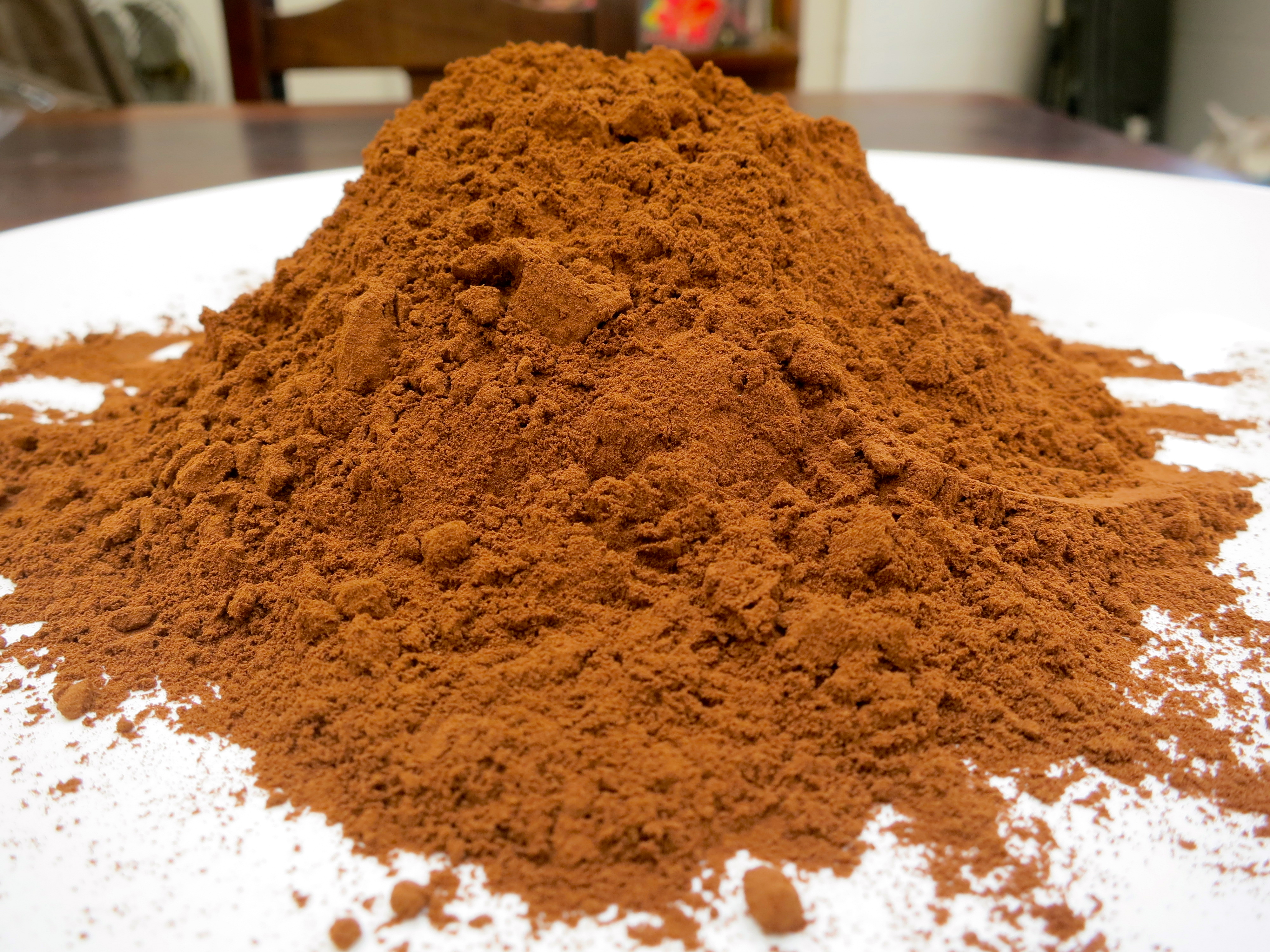
Hellooo, lovah. Order yours here.

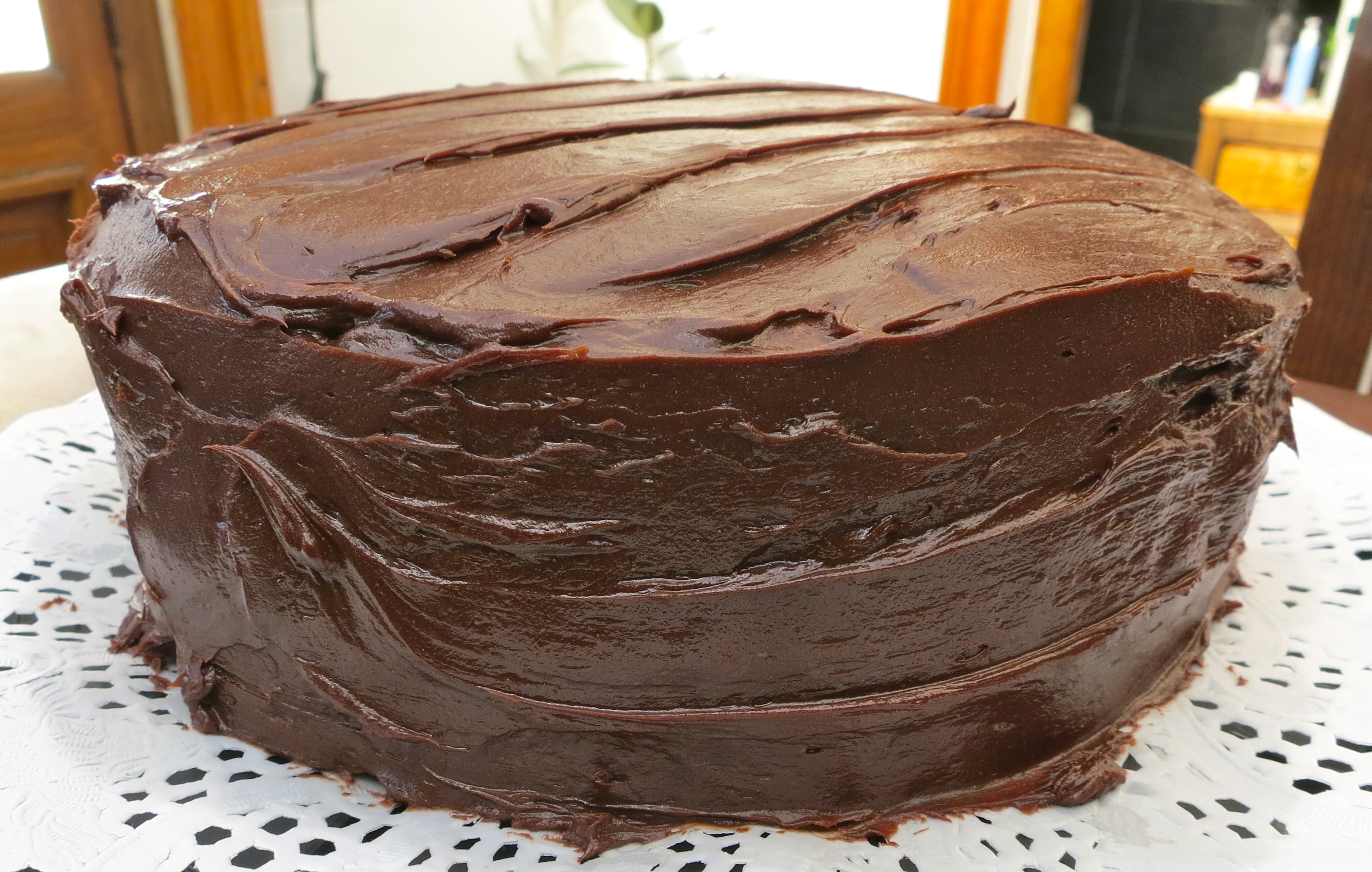
I love chocolate. I mean, who doesn’t love chocolate? Show yourselves, freaks! Of course, Buenos Aires is most well-known for dulce de leche, which is also highly lovable. But when it comes to chocolate, there’s just no substitution. So this can present a problem.

One of the challenges I’ve run into here is the lack of high-quality chocolate. Unsweetened baking chocolate is not the sort of thing you can find at the corner supermercado. Cocoa powder can be found at some dieteticas and in Barrio Chino, but I quickly realized the cocoa-to-cornstarch ratio in those packages was highly suspect. A flourless chocolate cake that only mildly tastes of chocolate? Completely unacceptable!

I tapped into the ex-pat foodie network for suggestions (thanks again, ladies!) and definitely plan to check out Fénix products soon, as well as casa de repostería Doña Clara based on this rave review from Kelly Volman. Though if I were basing my judgement solely on the cultural sensitivity of Doña Clara’s website, I may have put off that trip. I mean….?

Of course, there’s also the option of stocking up on quality chocolate when we visit the States, or enlisting incoming visitors to flaunt customs regulations and smuggle in some of the good stuff. Yes, I will do that. And no, I have no shame. But I really wanted to find a way to work within the confines of what’s readily available. So I’ve been experimenting.

Probably the most well-known substitute when a recipe calls for unsweetened baking chocolate is the trusty cocoa powder trick. Basically:

3 Tablespoons of cocoa powder + 1 Tablespoon of fat (butter, oil or shortening) = 1 ounce of unsweetened chocolate

But when your cocoa powder tastes more like flour than chocolate, this isn’t gonna fly.

Cocoa powder, eh? LIES!

Instead, I’ve found that with a little mathematical MacGyvering, substituting bittersweet chocolate for unsweetened yields the best, most chocolatey results. This substitution requires WAY more math than I’m typically willing to attempt, but a girl’s gotta do what a girl’s gotta do. Essentially, you need to figure out how much additional bittersweet chocolate you need to add to the recipe to arrive at 100% chocolate, and then reduce the amount of sugar that’s added to the recipe accordingly. Confused yet? Yeah, me too.

To make things easier on myself, and because I’m a firm believer that there’s no such thing as “too much chocolate” I’ve simplified this a bit. The most common bittersweet chocolate I’ve found is 60% cacao. So here’s my formula:

Multiply the amount of unsweetened chocolate by two to determine how much bittersweet chocolate to use. (Ex: If recipe calls for 6 ounces unsweetened chocolate, 6 x 2 = 12 ounces of bittersweet chocolate).

Reduce the amount of sugar added to the recipe by 1 Tablespoon per ounce of bittersweet chocolate. (Ex: For 12 ounces of bittersweet chocolate, reduce the sugar added by 12 Tablespoons, or 3/4 cup).

This is by no means scientific. Some may also recommend you adjust the amount of fat (butter, oil or shortening) you use in the recipe. But I’m already biting off more math than I can chew with the above method, especially considering the chocolate here is sold in grams instead of ounces so that requires more conversion magic. This version’s never failed me for cakes, brownies or frosting…so I’ll leave the perfectionism to the math nerds.

Expand Your Pizza Horizons at Sr. Telmo

12 Thursday Jul 2012

Posted by Anonymous in buenos aires, restaurants

≈ 2 Comments

Tags

pizza, San Telmo restaurants, Sr. Telmo

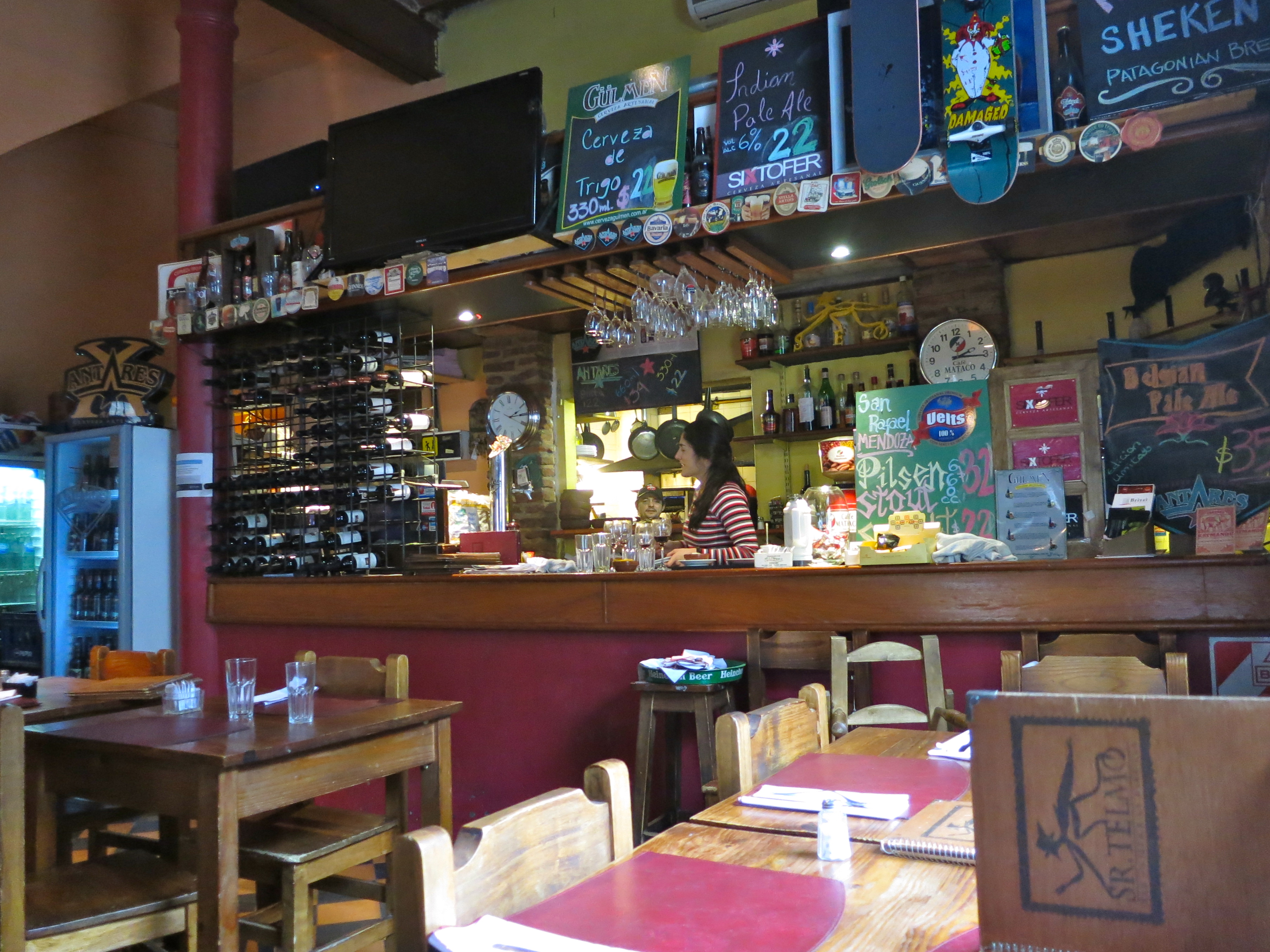
The bar at Sr. Telmo. Hooray, beer!

Pizza in Buenos Aires can elicit a variety of responses from foreigners. I personally enjoy it, but have heard some people get downright ANGRY about it. To which I say, tranqui…and go home.

The typical Argentine pizza’s thick, doughy crust, piles of cheese and near absence of sauce is most likely not like the pizza from a visitor’s country of origin. If you’re craving a New York or Chicago-style slice, it’s not going to fill that exact void. But anything that includes piles of cheese is still going to be pretty damn tasty.

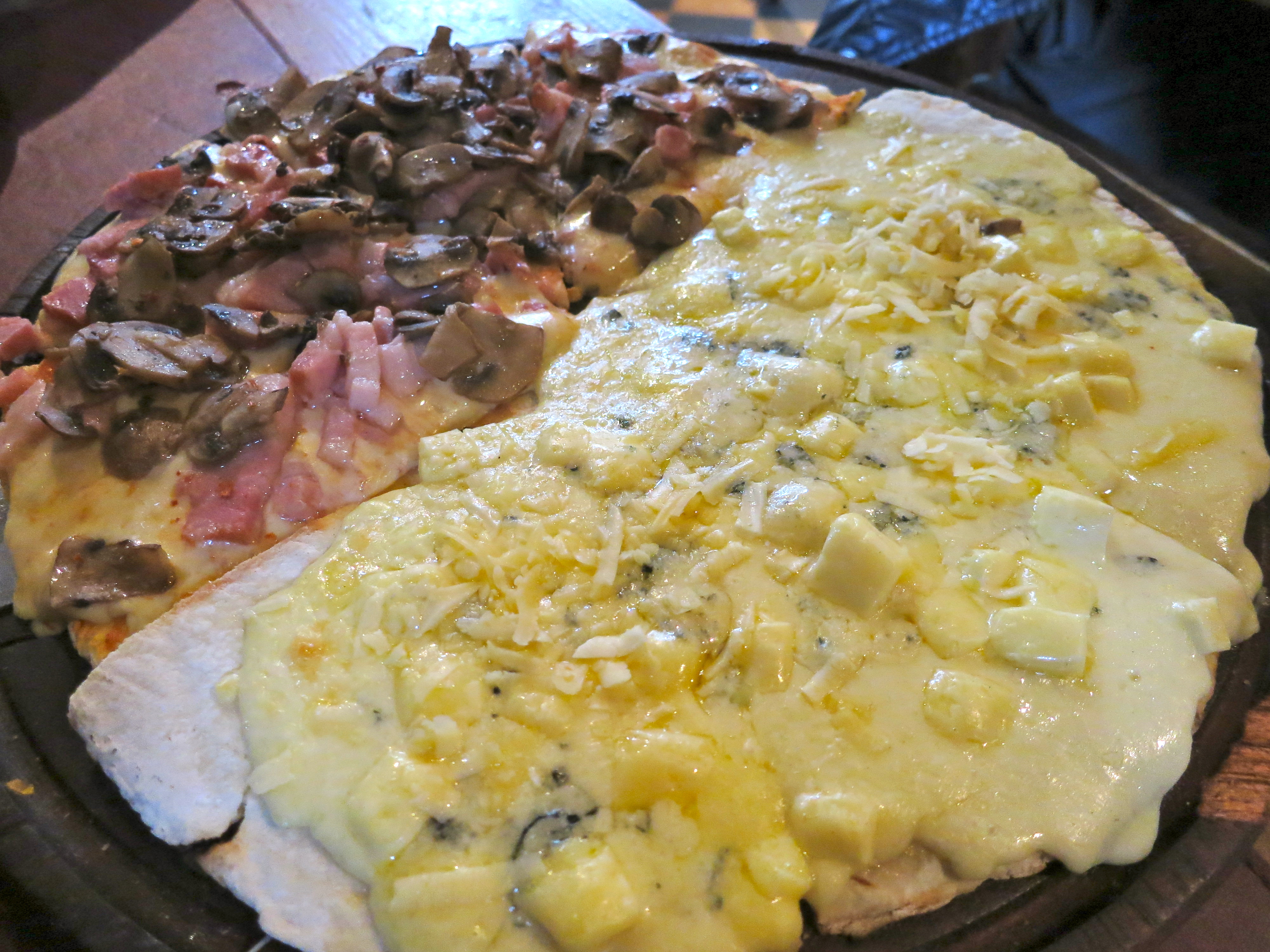
My favorite pizza in the city, to date, is from Sr. Telmo. With windows that line Defensa and Pasaje San Lorenzo, the ambience is open and inviting. The building boasts your standard San Telmo vibe of exposed brick everywhere the eye can see, and the walls display local works of art for sale. But the focus is on the pizza. Their pizza has a thin crust (by local standards) with an awesome variety of pizza roja (with sauce) or blanca (without) and toppings like arugula, shrimp, jamón crudo, mushrooms and more. Almost makes you not miss pepperoni.

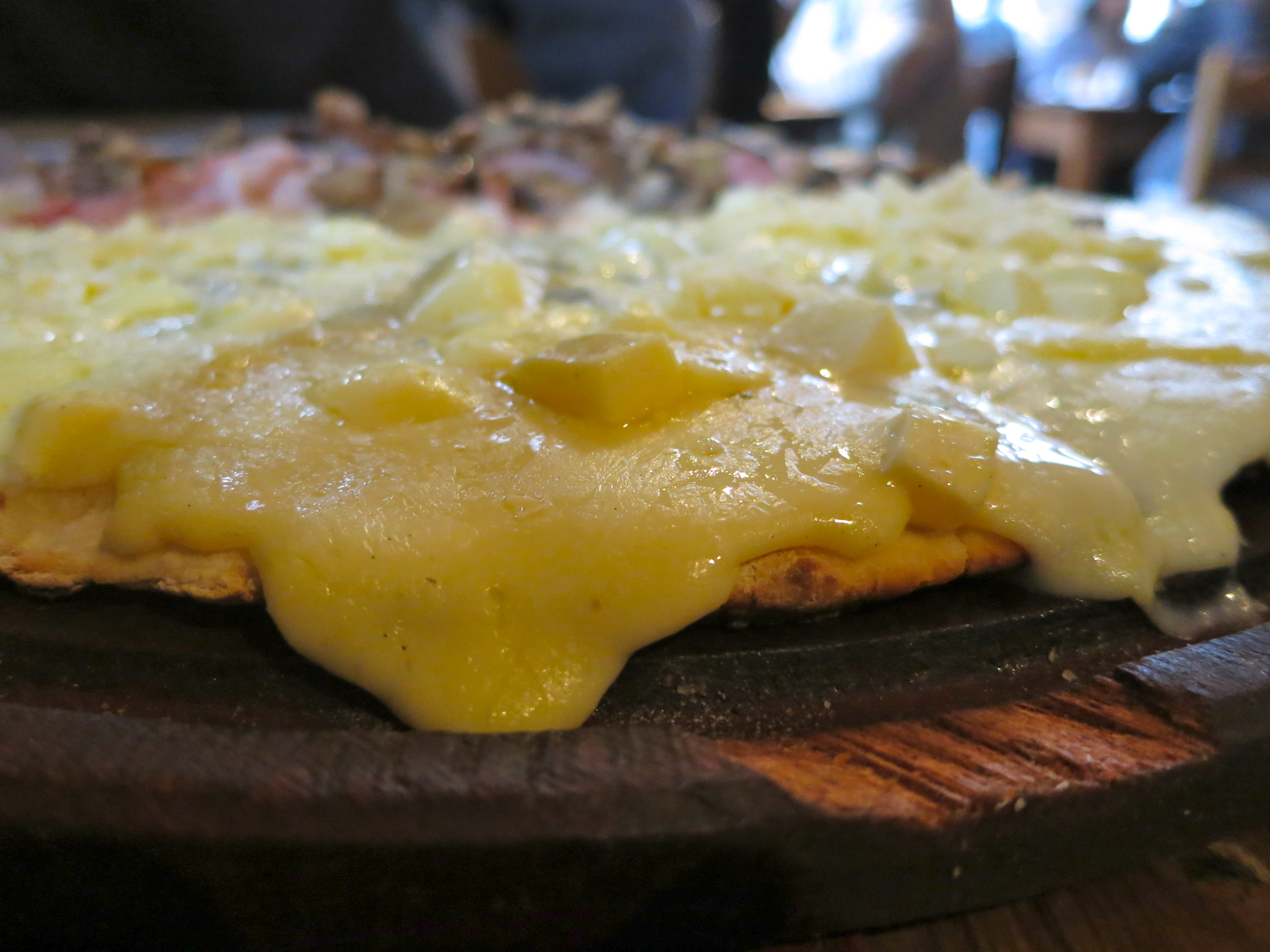
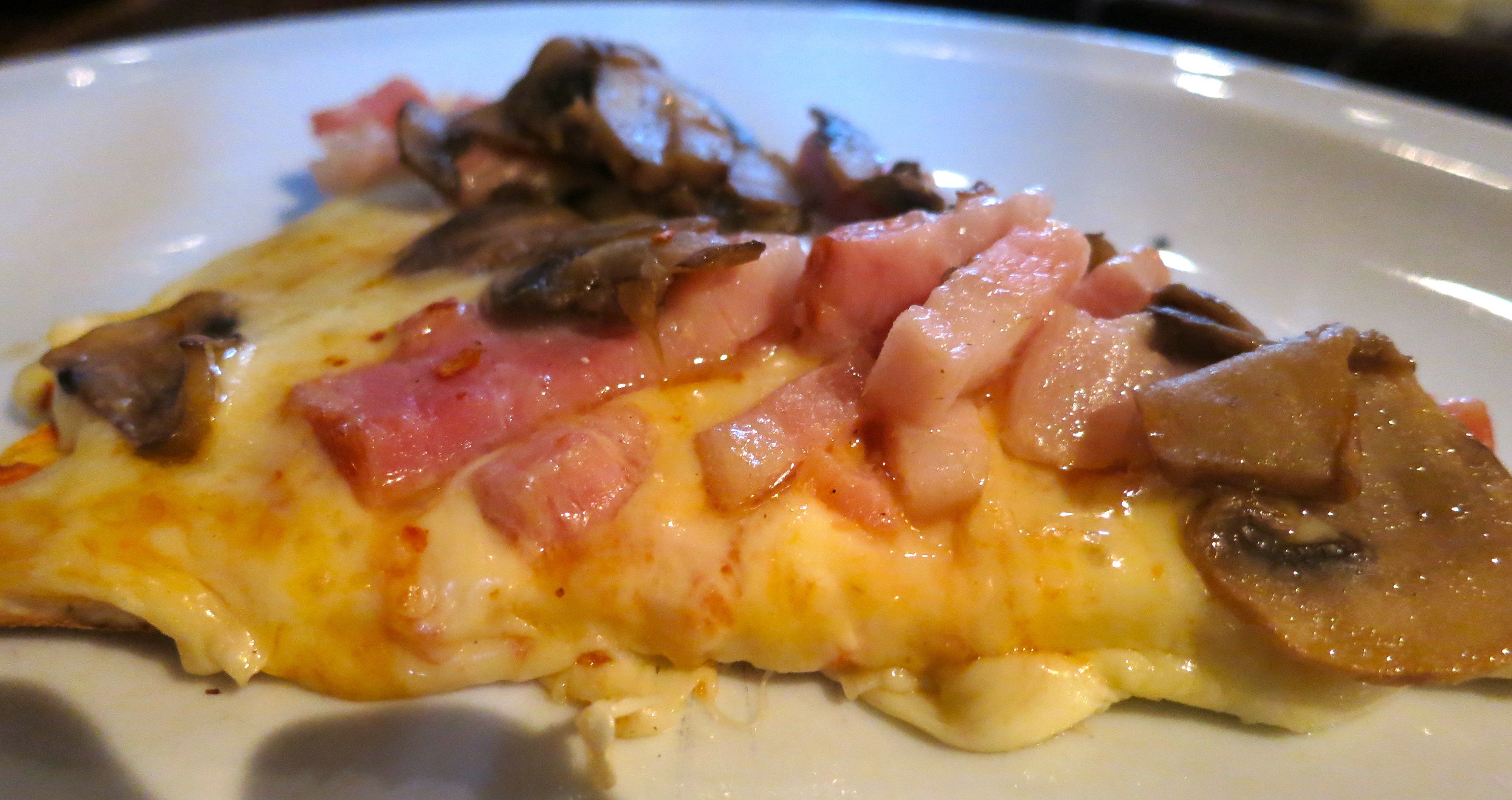
Pizza Roja del Pasajero from Sr. Telmo

To make it even better, you can order two halves so you can try different flavor combinations. Our favorite is a grande, one half the pizza blanca de cinco quesos oozing with mozzarella, provolone, parmesan, roquefort and goat cheeses. The other half, pizza roja del pasajero with (a bit of) sauce, mozzarella and piled with mushrooms and panceta, the Argentine bacon that’s more like a fatty ham than crispy yanqui-style bacon.

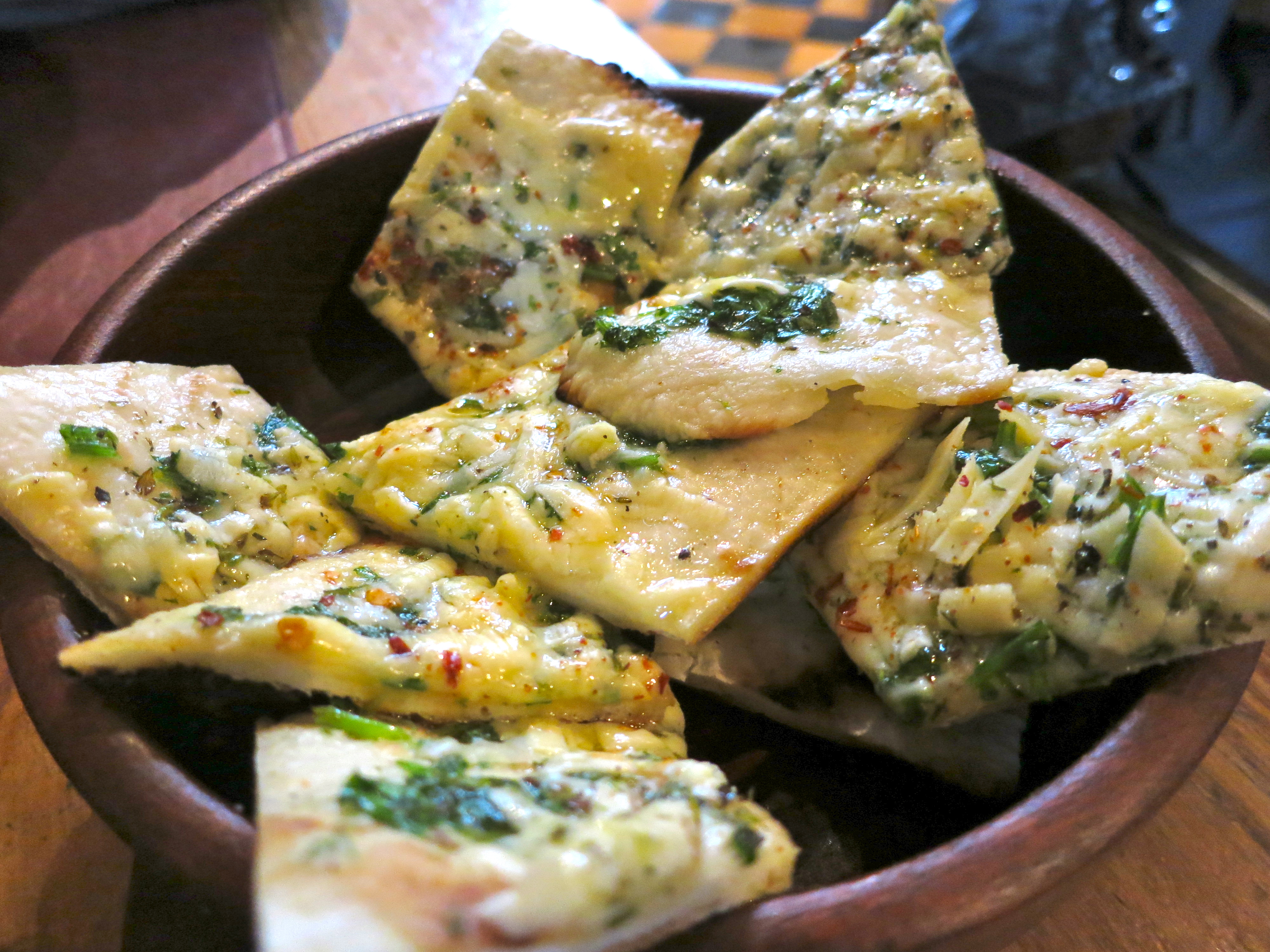
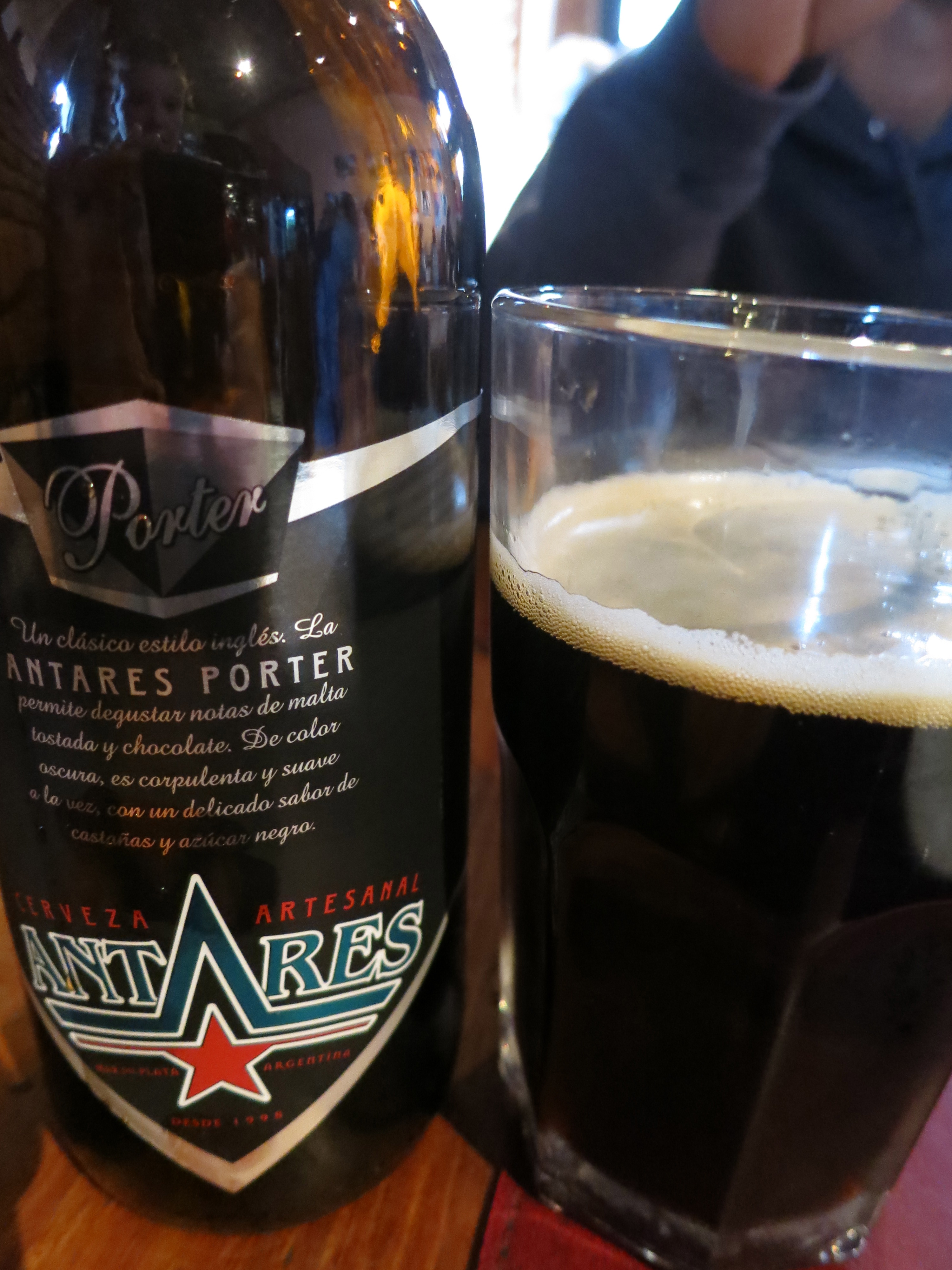
I also love the cheesy garlic bread they give you. Well worth the cubierto charge. I’d come here just for this! And to top it all off (er, wash it all down?) there’s a decent beer selection that rotates (translation: they run out) regularly. But there’s always something new and interesting to try, and what a welcome treat to trade in the litros of Quilmes and Stella for a cold Estrella Galicia or Antares Porter with your slice.

SR. TELMO – Defensa 756, esquina Pasaje San Lorenzo

Read the reviews on Guia Oleo.

Cachafaz: El Mejor Alfajor

10 Tuesday Jul 2012

Posted by Anonymous in buenos aires, desserts

≈ 1 Comment

Tags

alfajores, Cachafaz, dulce de leche

Buenos Aires is overflowing with dulce de leche. Whether it’s stuffed in a pastry, spread on a tostada, or my personal favorite, eaten by the cucharada, this caramel spread is a pervasive Argentine treat that makes its way into breakfast, lunch and dinner.

Perhaps the most common appearance of dulce de leche in Argentina is sandwiched between two shortbread cookies in the famous alfajor. I’ll just nip this in the bud for all the immature giggling gringos: yes, that’s pronounced in a way similar to how one may refer to a number one prostitute in English. Sigh. Some people….

I’ve not yet attempted to create my own alfajor. There are so many already on the market, I’ve kept myself busy sampling them all instead. The windows of every confitería in Buenos Aires boast piles of the delicate cookies, dusted with powdered sugar, rolled in coconut or dipped in chocolate. Many cafés and restaurants have their own home-made versions, ranging from tiny bite-sized cookies to cookies as big as your face. And kioscos on every corner offer a variety of pre-packaged options.

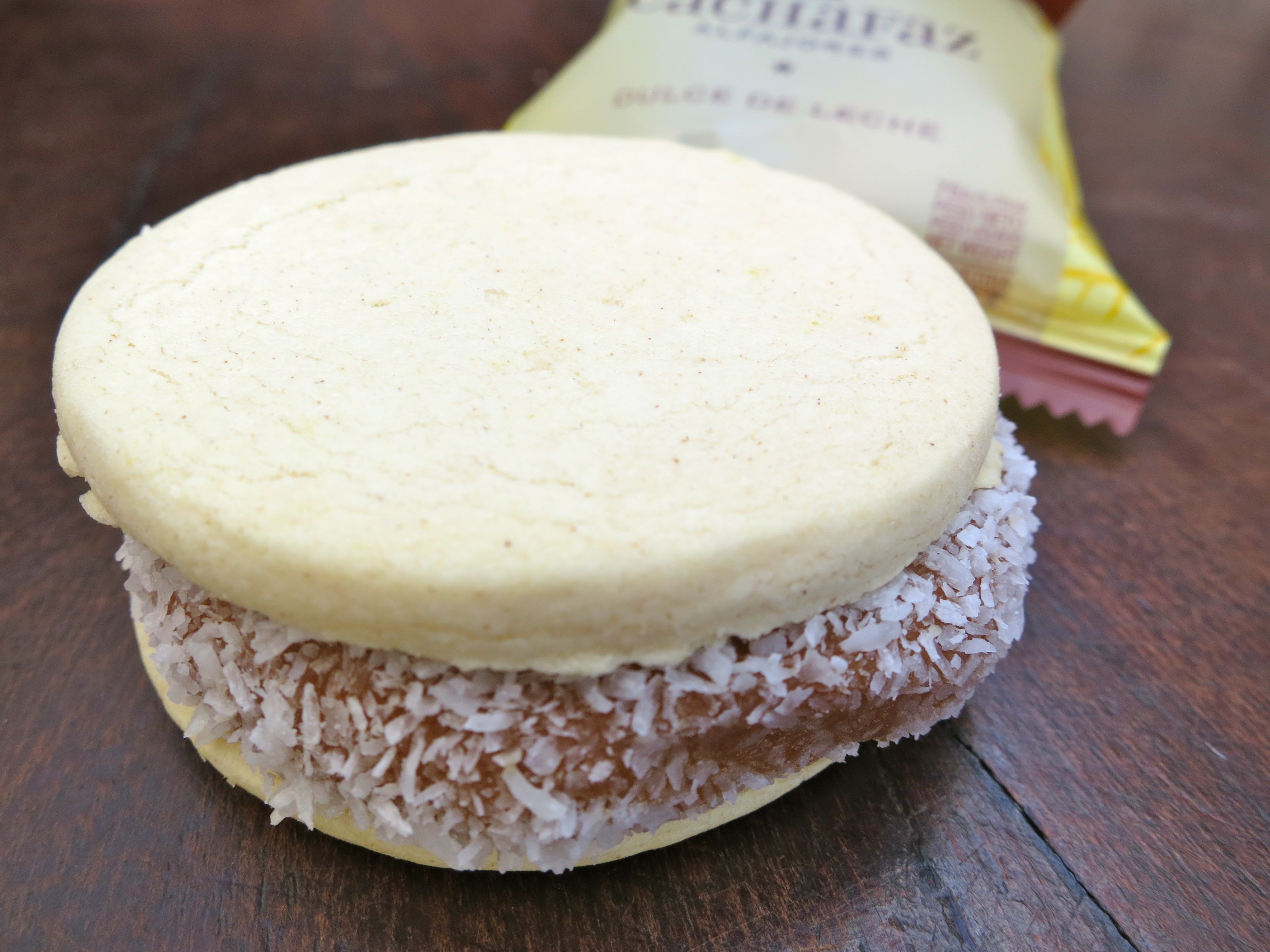
Of course, being somewhat snobbish about things like this (homemade > store-bought) that was the last place I expected to find a winner. But hands down, without a doubt, no two ways about it, Cachafaz es lo más. The best of the best. The alpha alfajor.

Cachafaz makes a variety of alfajores, but my favorite is the basic dulce de leche version: thick, creamy dulce de leche sandwiched between two buttery shortbread cookies and rolled in coconut flakes. They can be found at any local kiosco or supermercado chino for around $7 pesos a pop.

Birthday Brunch at Hernán Gipponi

02 Monday Jul 2012

Posted by Anonymous in buenos aires, restaurants

≈ 3 Comments

Tags

brunch in Buenos Aires, Hernán Gipponi

I’ve reached the age where I’d prefer that my birthdays be non-events. Sure, it’s a perfect excuse for a great meal and decadent dessert, but beyond that…let’s just say you’ll never hear me claim it’s my “birthday week” and chances are I’m not even sure on which day it falls. I’m also awful at actually making any plans for said great meal, but Gaspar’s always on the ball. I’m in good hands.

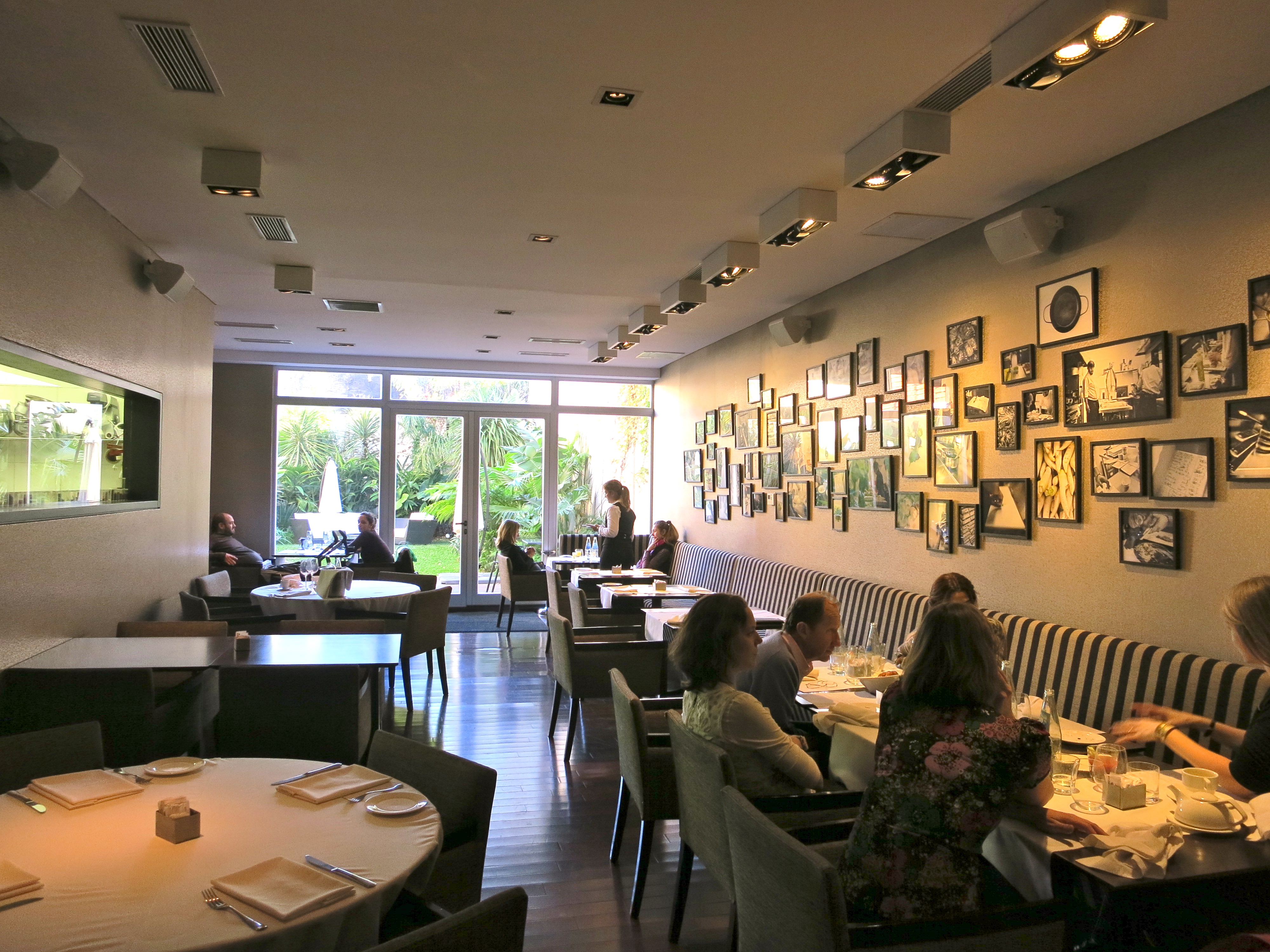
This year, he decided it was time to try the much-lauded brunch at Hernán Gipponi in the Hotel Fierro. Day-drinking and a parade of gourmet food? That man knows me so well.

The brunch scene still seems to be in its infancy here in Buenos Aires, but I’m hopeful that sooner or later more restaurant owners will come around to the glory of diving into French toast and mimosas at 1pm – excuse me, 13hs. Hernán Gipponi’s doing a great job of leading by example.

The multi-course brunch menu changes regularly, and while it’s pricier than the average Argentine desayuno of a cortado and some medialunas, in my opinion it’s a bargain in that you get much more than what you pay for. With only ten tables, the setting is intimate and the service remarkably attentive for Buenos Aires. Friendly, too. “¿Estadounidenses? Pero hablan muy bien!” A well-meaning but back-handed compliment that’s a distant second to my favorite, “Pero no son gordos!”

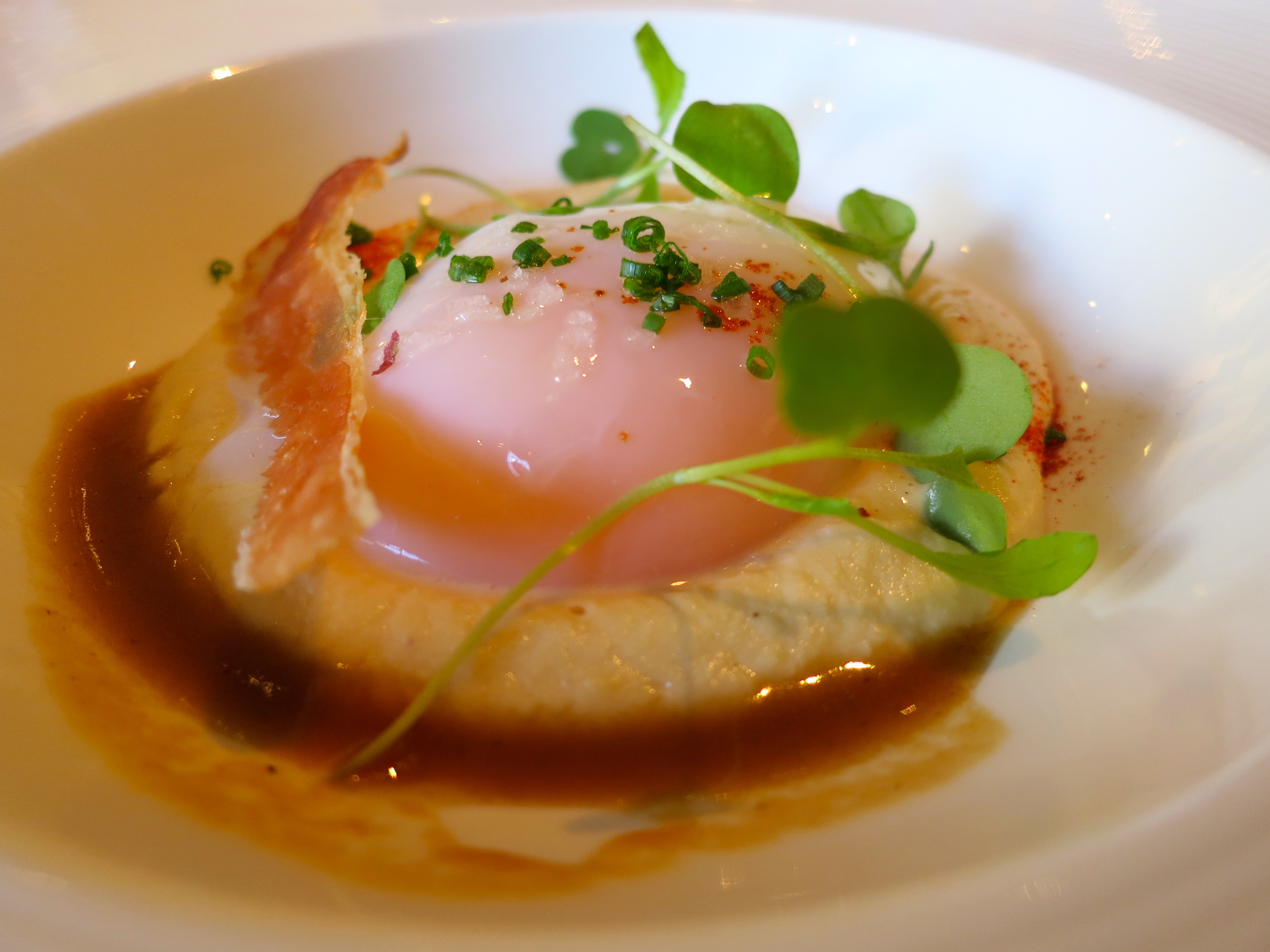
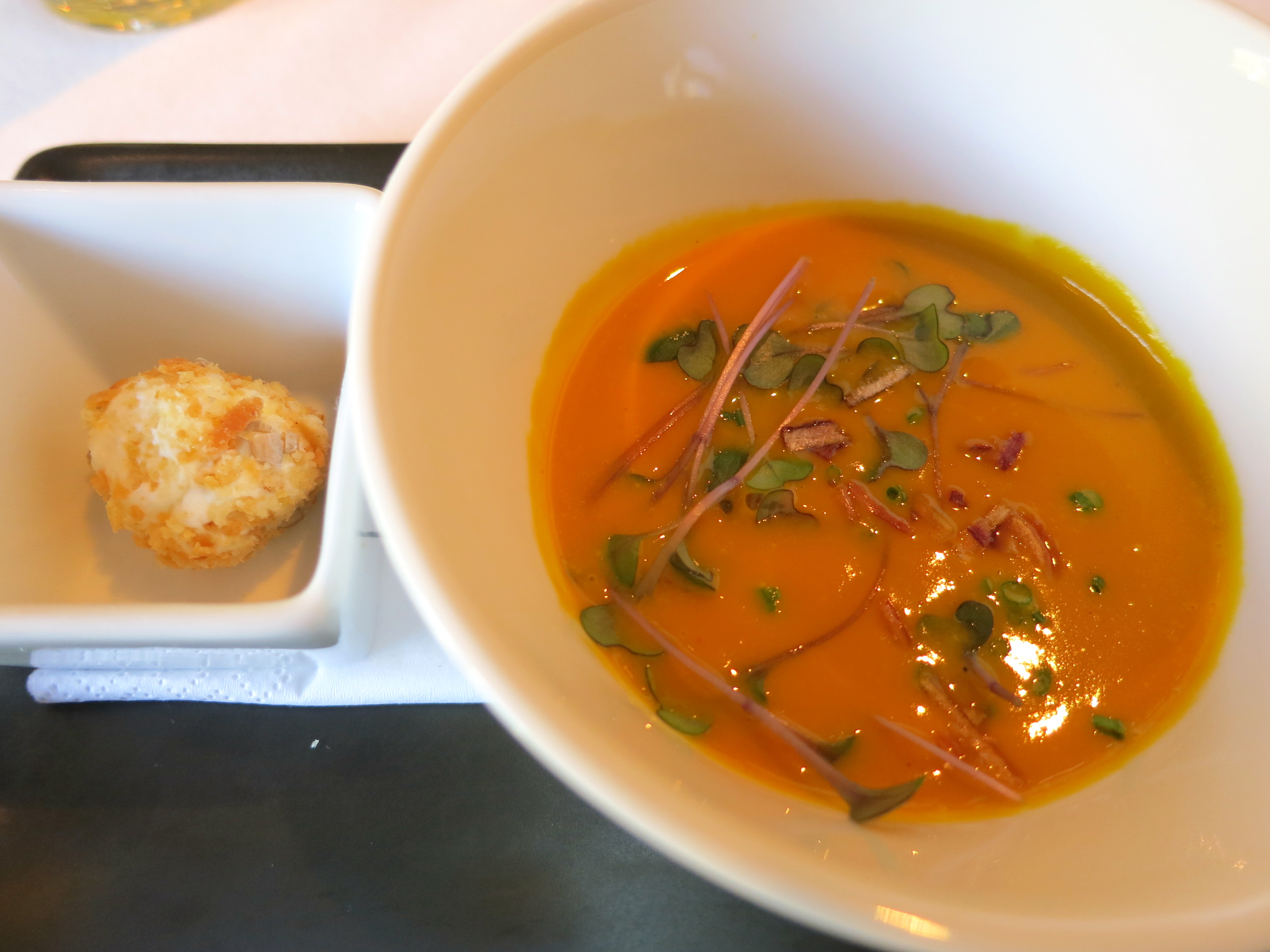
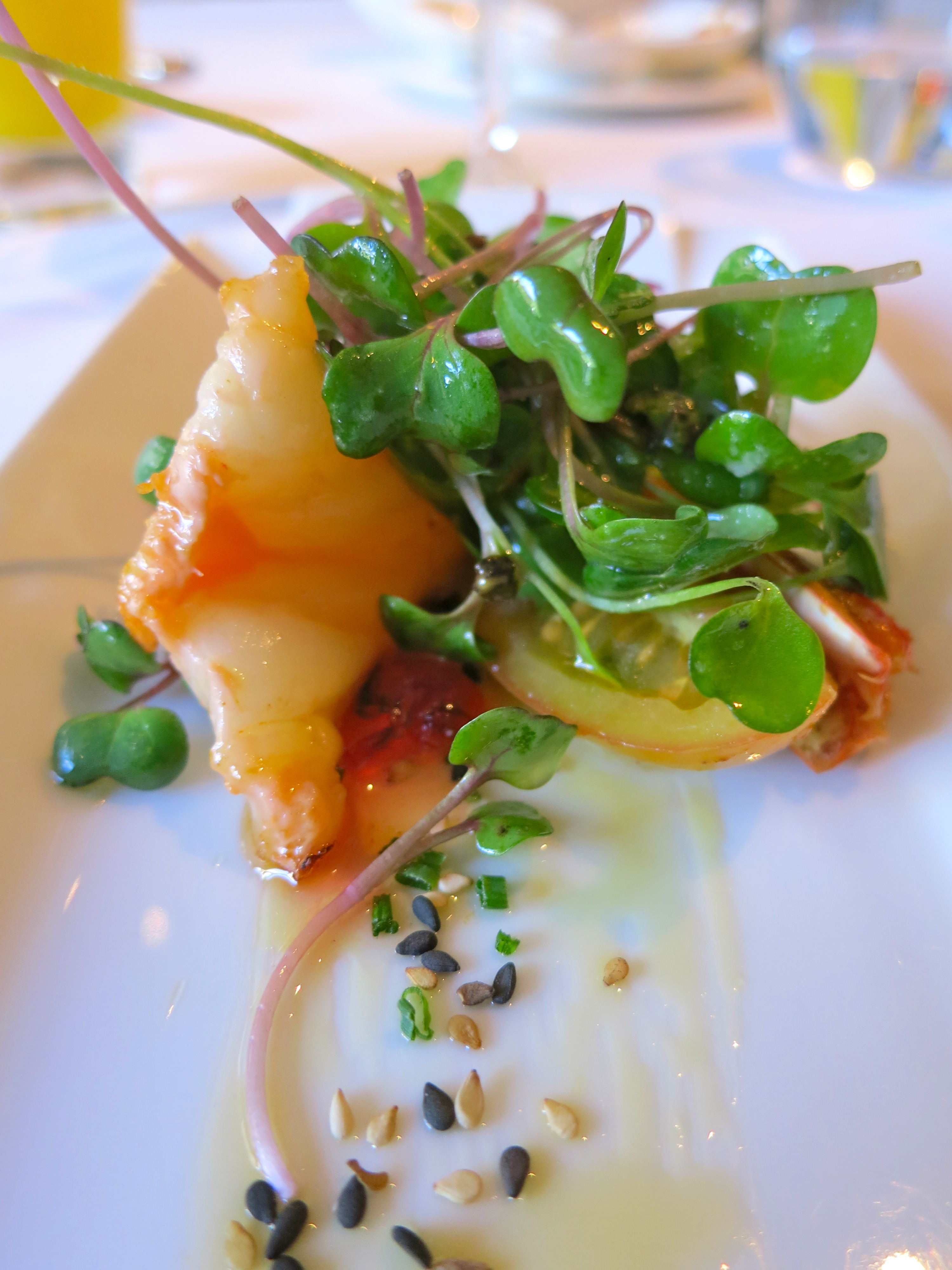
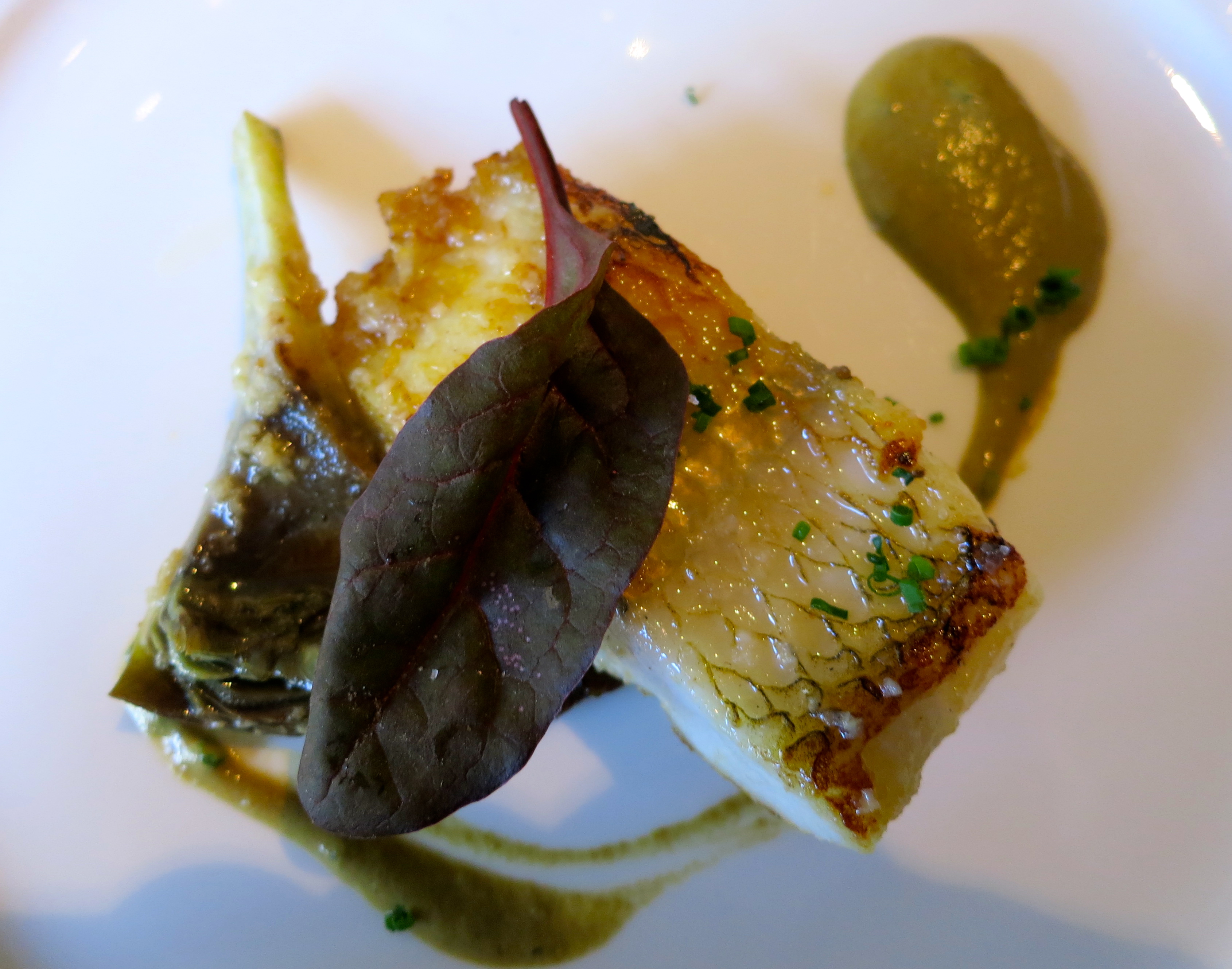
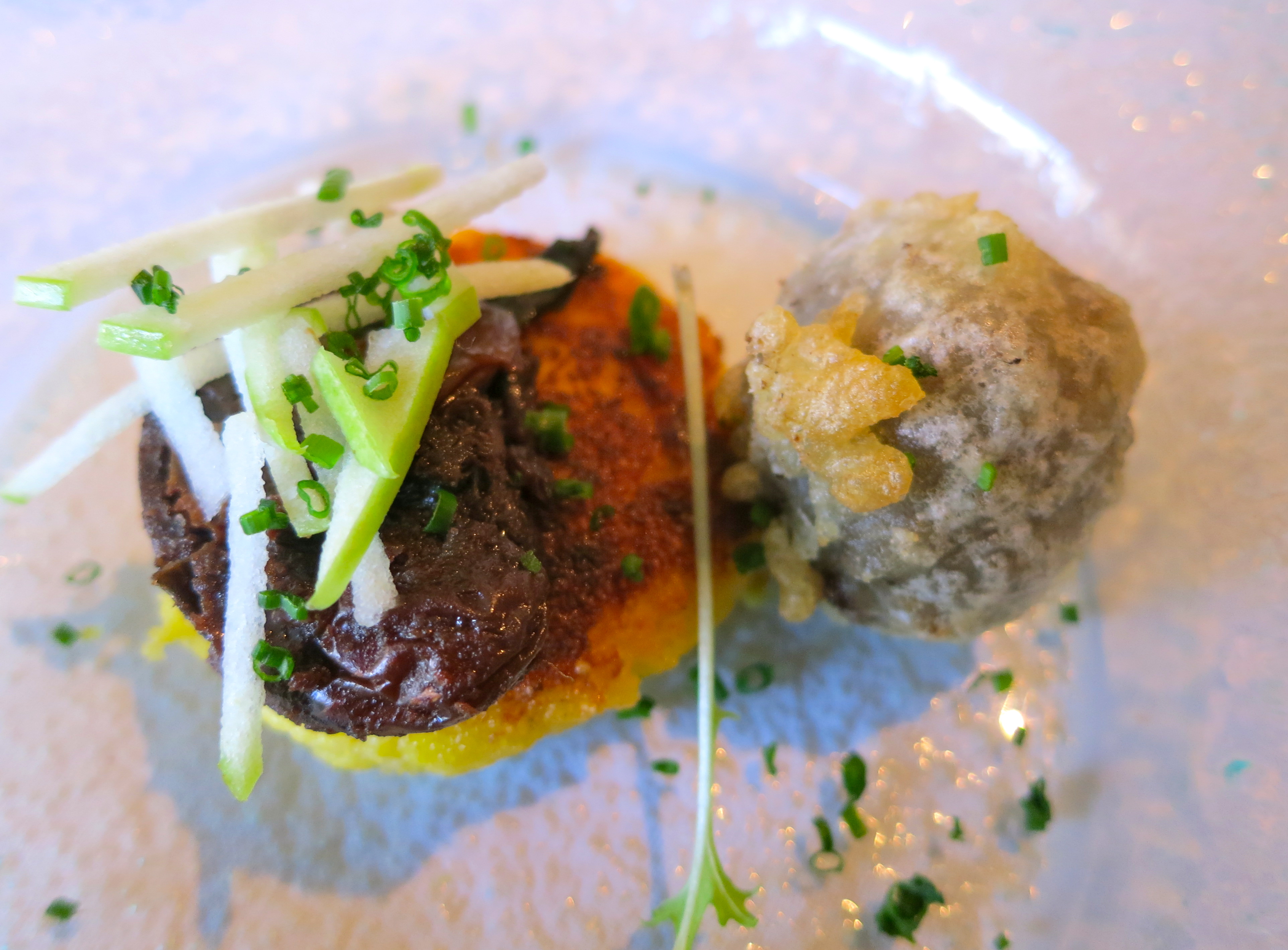
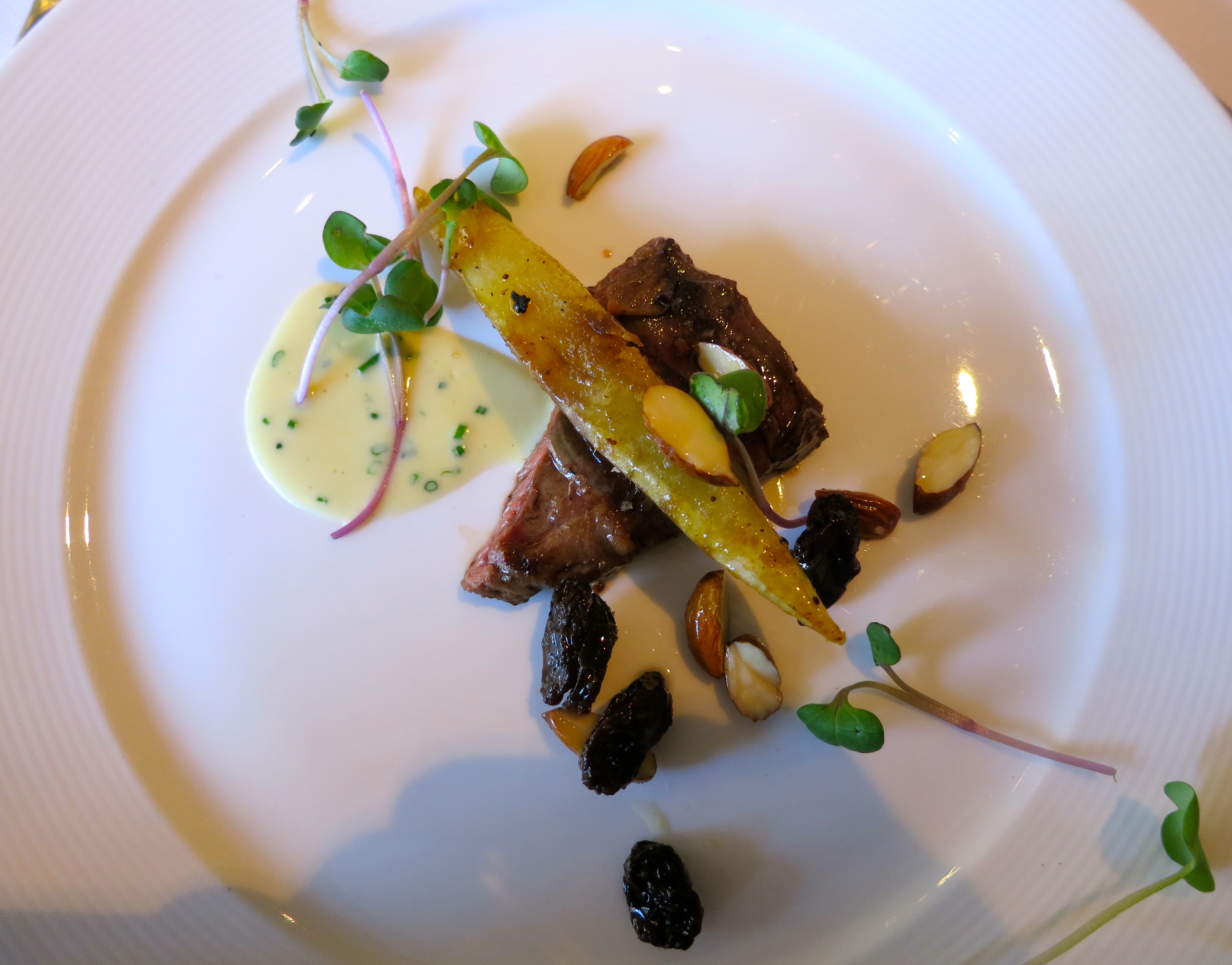
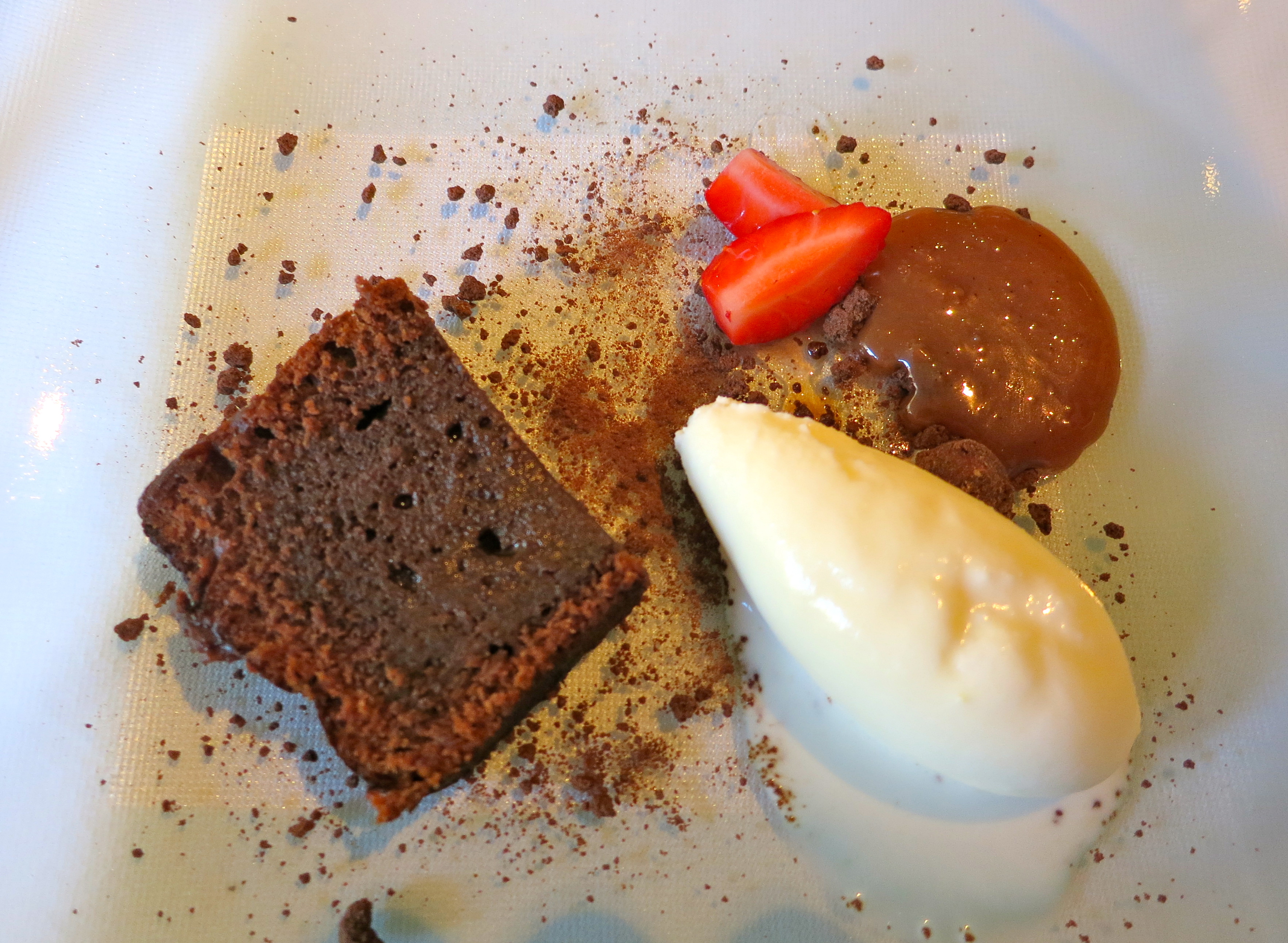
The photos speak for themselves. I did miss a few courses because I was so busy stuffing them in my belly. It’s hard to choose a favorite, but it MAY have been the polenta with blue cheese and a morcilla fritter. Although I could have eaten that hummus that came with the boiled egg by the spoonful.

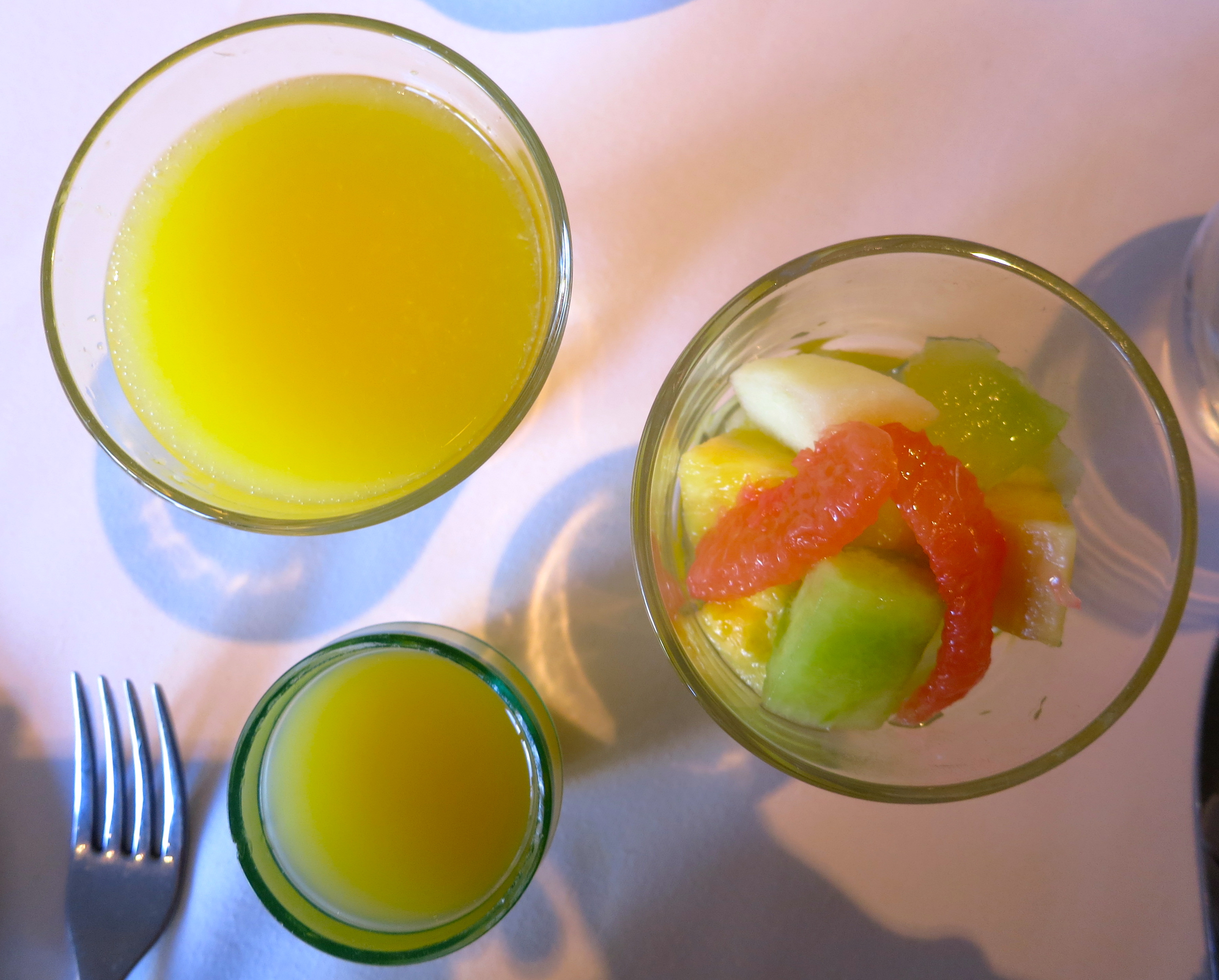
orange juice, fruit & vegetable juice shot, and seasonal fresh fruit

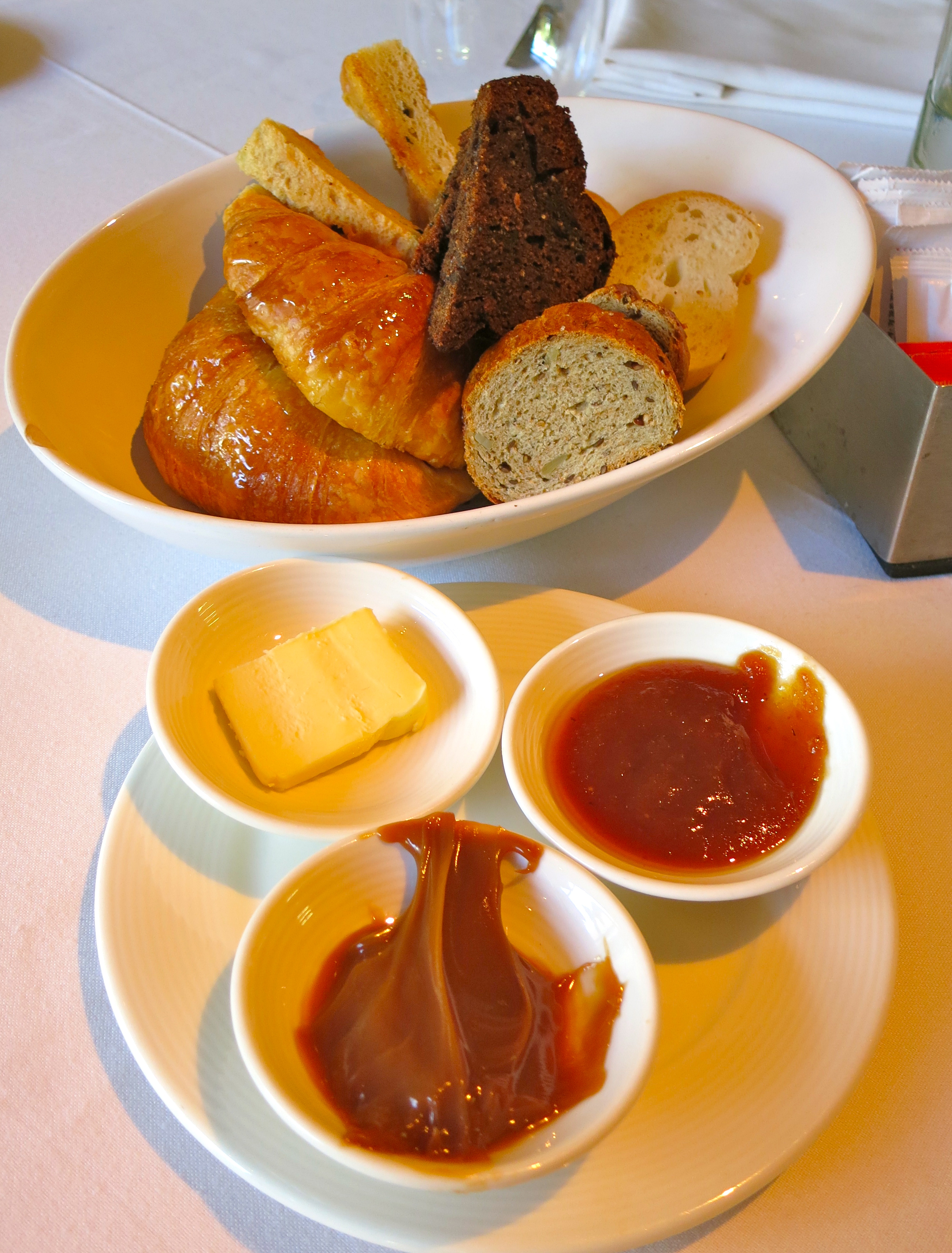
Medialunas & fresh bread with butter, dulce de leche, and mermelada de membrillo

68° boiled egg, hummus, crispy bacon and meat broth

Pumpkin cream soup, goat cheese and sweet onions

Prawn with mandarine, campari and beans

Pejerrey with roasted tomato, tofu seeds and liquified mussels

Organic polenta, blue cheese and morcilla fritter

Skirt steak with sweet potato, almonds, raisins and leek cream

Chocolate nemesis with creamy lemon ice cream, homemade dulce de leche and strawberries

Don’t take my word for it, pretty much every food loving ex-pat living in Buenos Aires has heaped this spot with praise. Check out the mouth-watering reviews and amazing photos on Pick Up The Fork, The Lost Asian and La Panza Porteña. But be warned, the price of the brunch has increased in the months since some of these reviews, and is now $120 pesos per person. Non-existent inflation’s a bitch.

HERNÁN GIPPONI – Soler 5862 in the Fierro Hotel

I Love You, Buenos Aires. But Your Coffee Sucks.

28 Thursday Jun 2012

Posted by Anonymous in buenos aires

≈ 15 Comments

Tags

Buenos Aires coffee, cafe torrado, moka pot

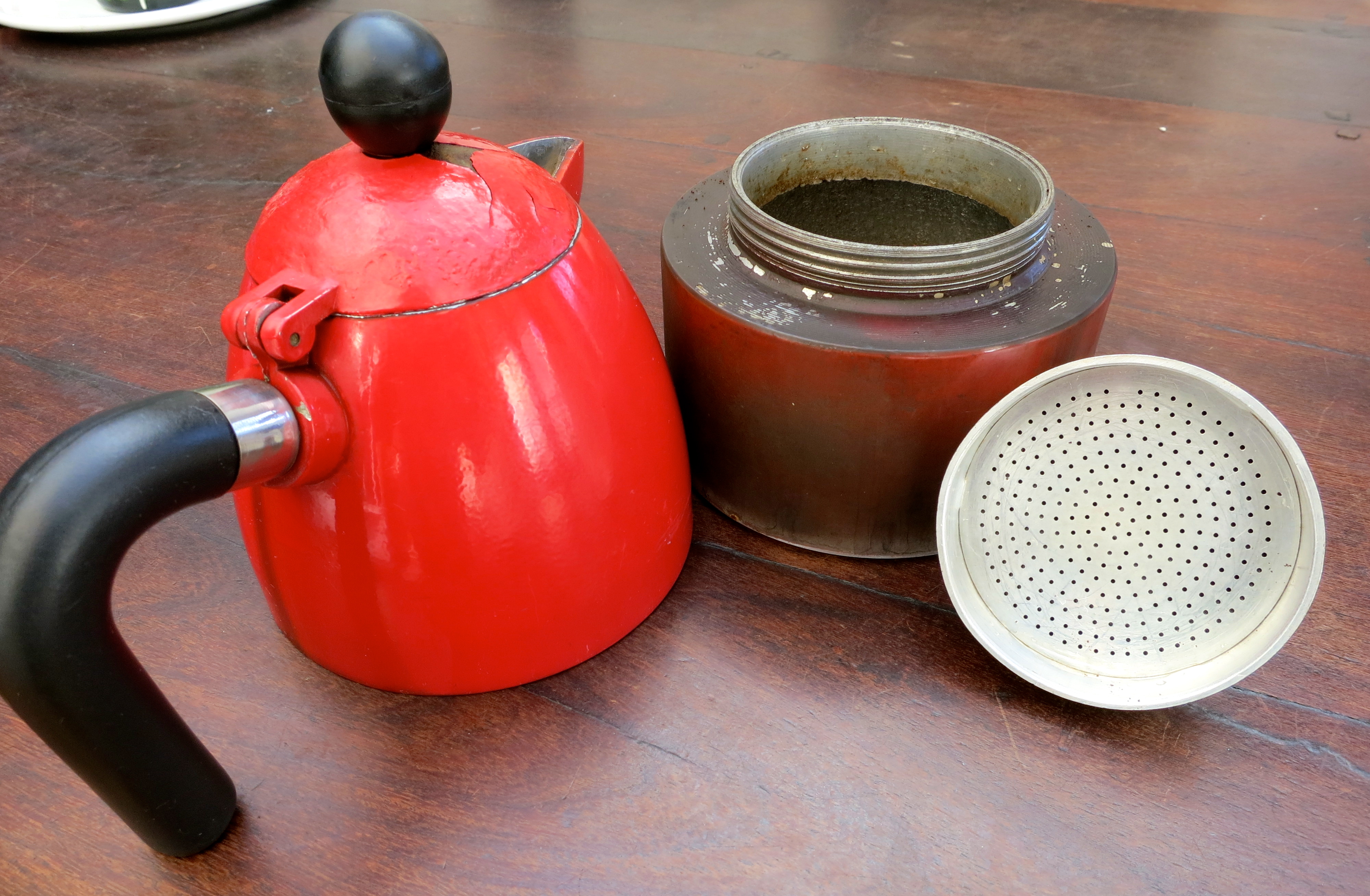
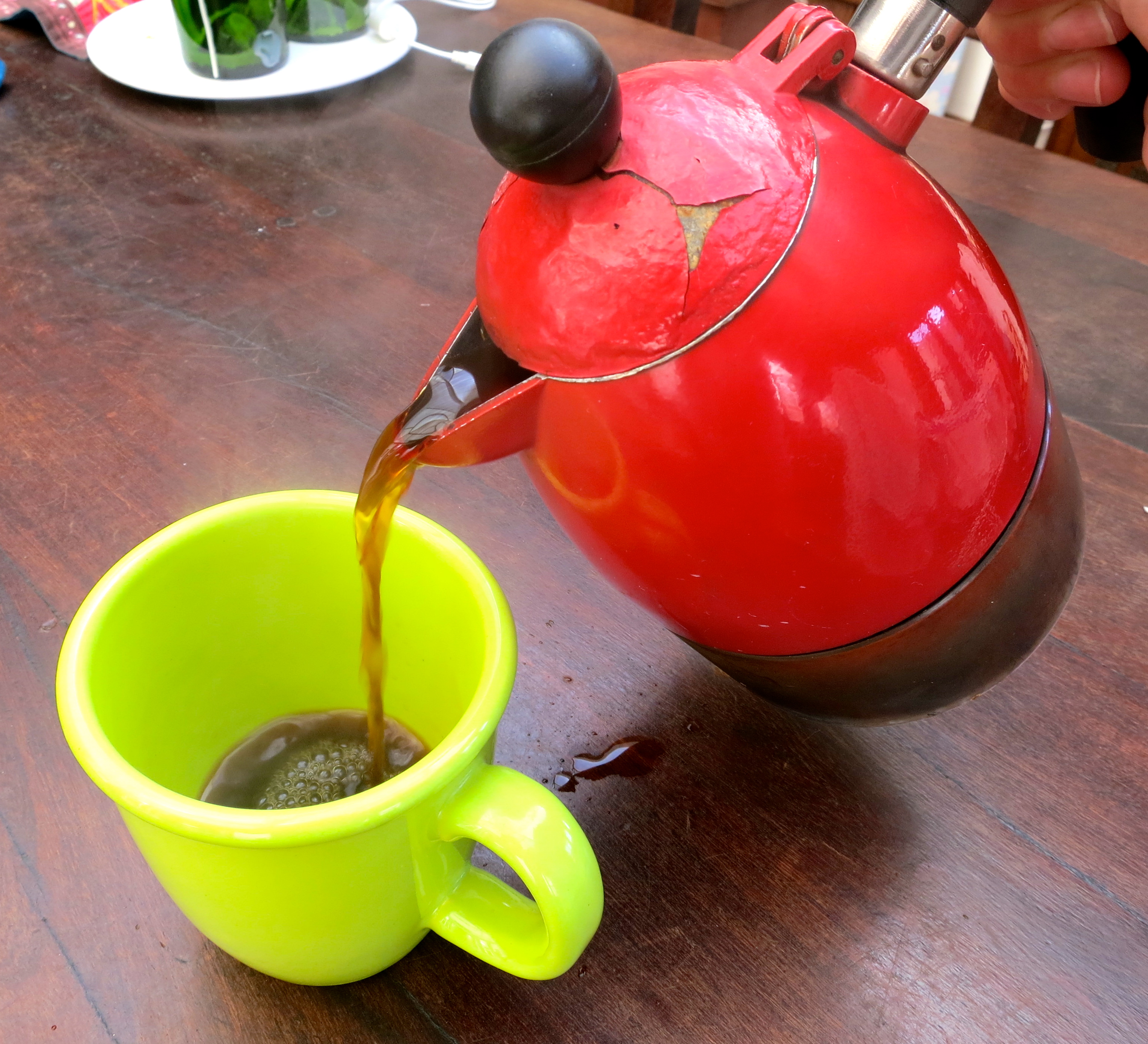
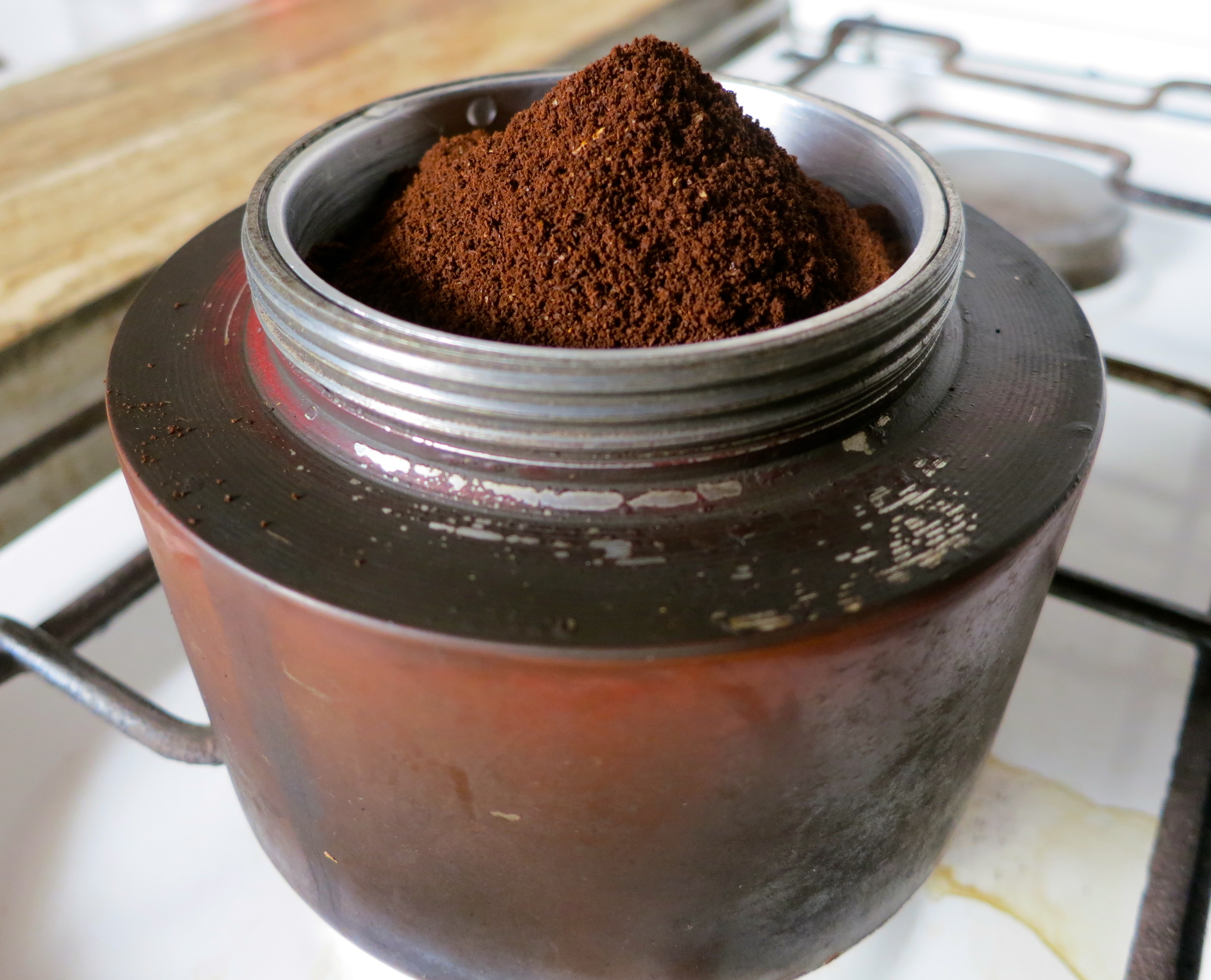
I’ll admit it. As much as I tried not to arrive in Buenos Aires with any pre-conceived notions about what it would be like, I was harboring one or two. I came face to face with the first when I woke up in our new apartment. Giddy with the excitement of being in a whole new world, I was anxious to brew a cup of strong, delicious coffee with this strange coffee-making contraption (which I’ve since learned is a moka pot) and relax on the terrace we’d always longed for.

I expected that learning to use this new pot would be the most challenging part of the process. Alas, it was not. Choking down the results was worse.

At the risk of sounding superior, I’m about to make a sweeping generalization: the coffee here sucks.

Perhaps it’s the embarrassing tendency many people in the States have of lumping all things south of the border into one category (ick), but I had unknowingly just assumed that the coffee would be amazing. The first time I raised the cup to my lips, I was convinced I’d done something wrong. It can’t possibly be THAT bad….can it? Watery and bitter, no amount of sugar or hot frothy milk could save it.

So of course, I turned to the interwebs for answers. Gringo In Buenos Aires has an excellent blog post on the topic that answered many of the questions clouding my caffeine-deprived brain.

As the Gringo notes, the coffee culture here is pretty delightful. In most cafés, your coffee order brings with it a side of soda water and a plate of cookies (!!!) and you’re welcome and expected to hang out for as long as you like. The taste of that coffee is hit or miss. But hello, did I mention the plate of cookies?

Really, my issue is more with the availability of good coffee to make at home. I’ve never been a huge fan of take-out coffee, and if I’m at a café chances are I’m sipping something with an alcohol content. I prefer to enjoy my daily cup of joe at home in my PJ’s, whether I’m getting ready for work or enjoying a lazy weekend morning. Back in the USA, we had a Keurig (I miss you, you gorgeous magic machine!) as well as a coffee grinder. We were spoiled. Similar options exist here, but as anyone who’s purchased electronics in this country can attest, one does not necessarily get what one pays for. And I’ve grown to love my trusty moka pot.

As for tracking down quality beans, most of the supermarkets carry coffee labeled torrado, meaning the beans have been roasted with sugar unlike what we’re used to in some other countries. I’m not sure how that process results in a more bitter taste, but trust me, it sure does.

Thankfully, there ARE other options, it just takes some looking around and some extra pesos. Gaspar came across Est. General de Cafe (Lavalle 1701, Microcentro) and we will never again brew some nasty Cabrales in our little moka pot. The shop offers a variety of blends from throughout South America and Africa that range from sort of pricey to reeeeally pricey. But the quality is outstanding, and every time he picks up more I can smell the deliciousness before he even walks in the door. Worth it, for a cup of happiness every morning.

Any other suggestions for where to find good coffee beans in Buenos Aires?

Barrio Chino, A Culinary Treasure Trove in Buenos Aires

25 Monday Jun 2012

Posted by Anonymous in buenos aires

≈ 3 Comments

Tags

barrio chino, Buenos Aires, chinatown, seafood in Buenos Aires

As a non-native Spanish-speaker, one of the first things I did upon moving to Buenos Aires was enroll in group Spanish lessons. Best decision ever. Not only for the obvious reason: being able to communicate is preferable to being clueless and crying at the supermarket. (Shut up, it happens).

But the relationships, perspectives and experiences that I gained in those classes were invaluable. And of course, there was the opportunity to feed groups of people who’d never had chocolate chip cookies before.
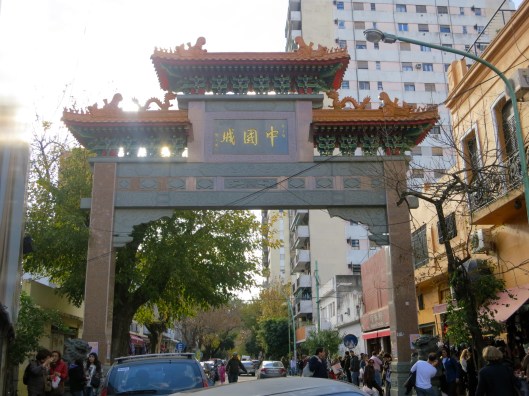
It was Anouke, an incredibly thoughtful free spirit from Holland trekking her way through South America, who insisted I check out Barrio Chino. With tales of an extensive fish market and barrels of spices and grains, I was quickly convinced that even though Buenos Aires’ Chinatown was far from my neighborhood and I’m lazy like that (#realtalk) it was vale la pena.

In the cities I’ve called home stateside, I took for granted the easy, close access to…well, pretty much everything. So after a journey that takes an hour on public transit, when I find myself face to face with an array of products that used to be available at my local supermarket or with the click of a button online, it’s uhhhhh-mazing! I pretty much danced through the aisles, stocking up on all the random items that I’d never realized I could miss so much, while Gaspar silently (smart man) questioned how and why we would possibly need that much hoison sauce.

Barrio Chino is small, a mere handful of blocks. But what it lacks in space it makes up for with an intense barrage of flavors, colors and smells…for better (Peking duck!) or worse (ewww, fish market). I just love browsing through all the shops, you can always find something new.

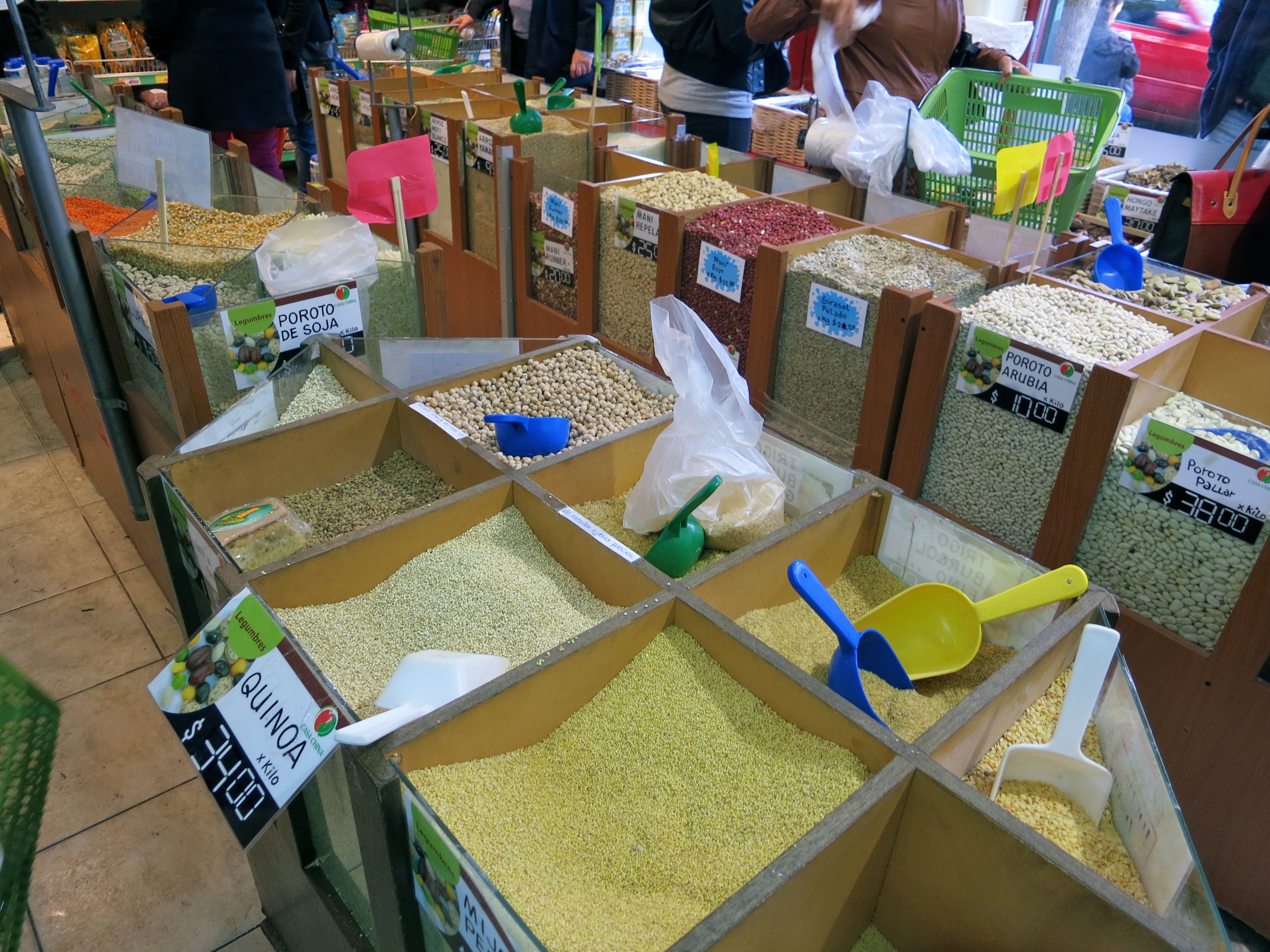
Just a sample of the grains and dry goods available at Casa China.

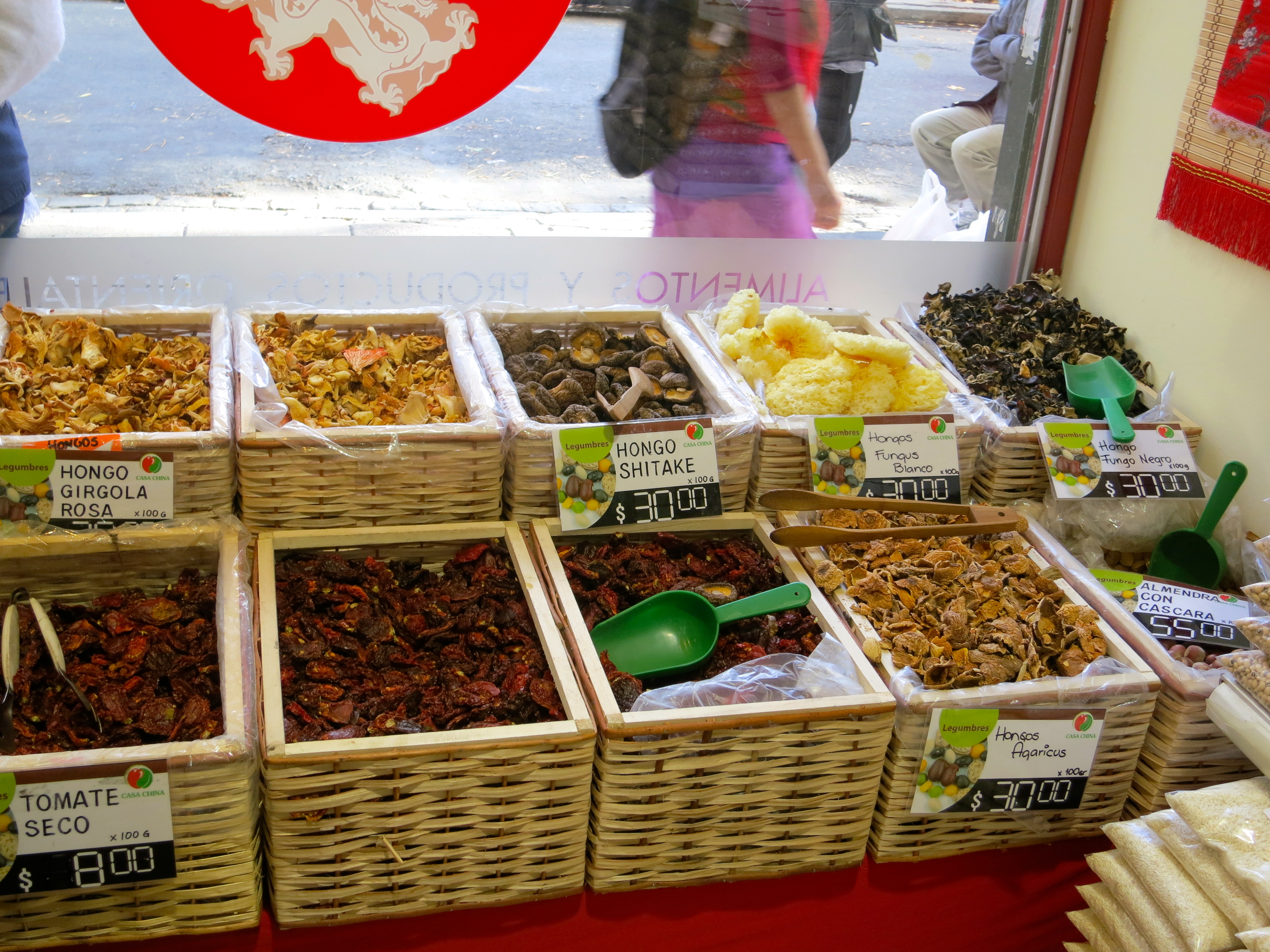
So before we get to the smelly stuff, my favorite stop in Barrio Chino is Casa China, a dry goods store that I love to wander through. They stock everything from sauces, spices and curries to grains and noodles to the most extensive selection of dried beans and mushrooms I’ve ever seen. You can also find cocoa powder, rice and wheat flours, and other goodies lining the shelves that you won’t find at the local supermercado.
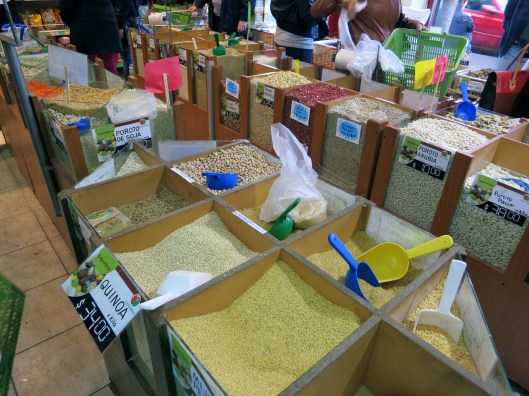
Bins full of grains and dried beans at Casa China
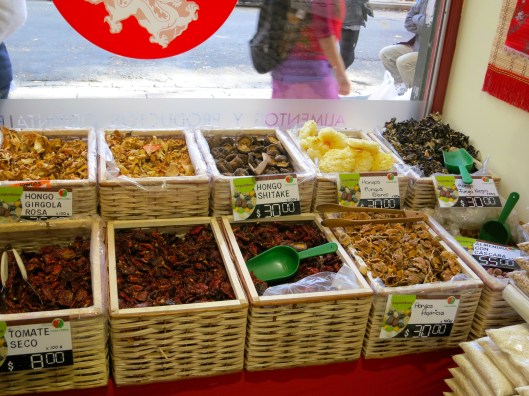
Dried tomatoes and a variety of dried mushrooms at Casa China

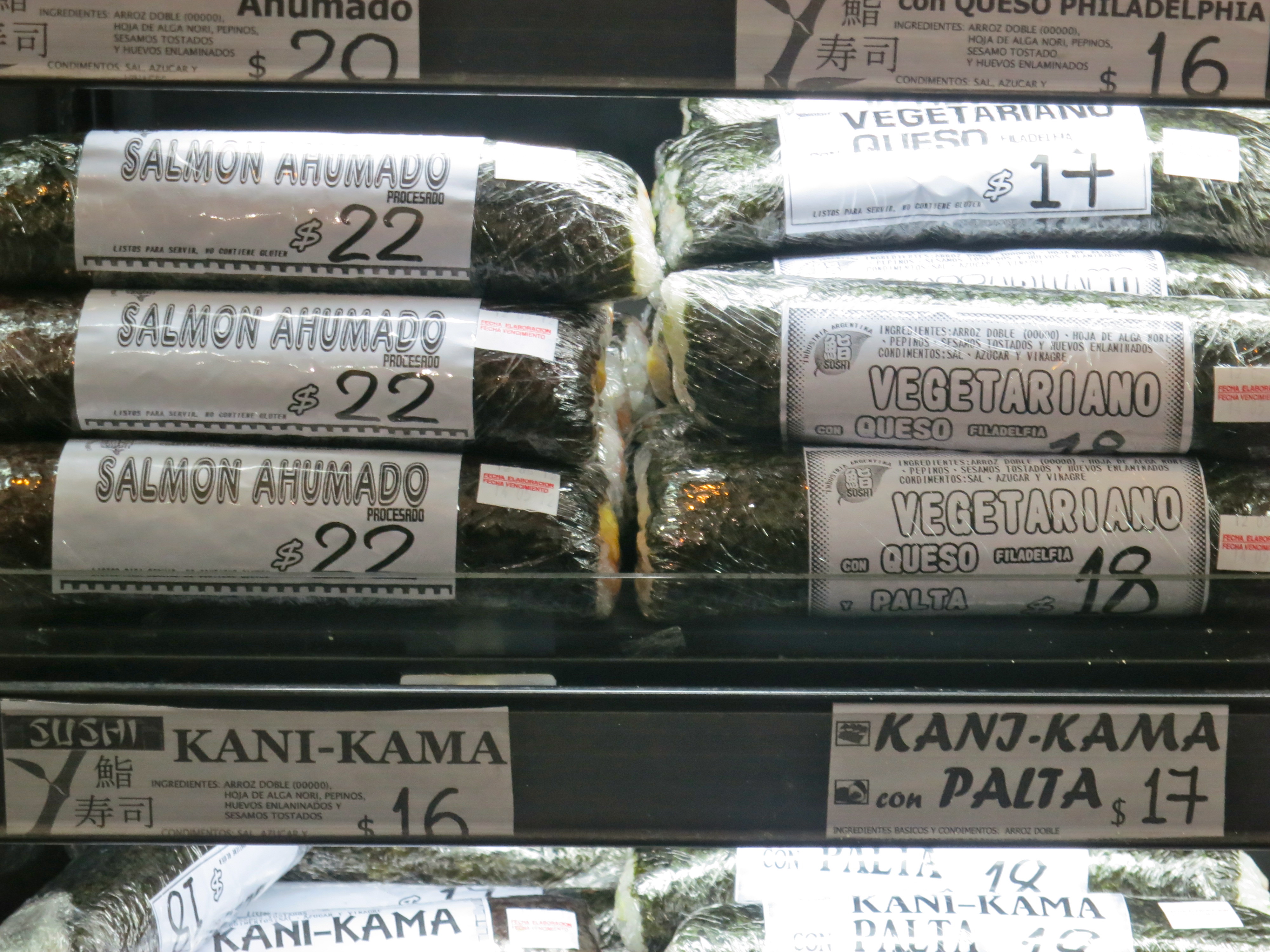
Another one of my favorite things in Barrio Chino: sushi burritos. They’re not actually burritos, but it’s the best description I have for these massive, un-cut rolls of sushi that we always just end up eating as if they were burritos from a street vendor. More civilized people may take them home and cut them up properly, but where’s the fun in that? When your other hand is clutching a warm import beer you’ve never heard of, it’s no time to worry about appearances.
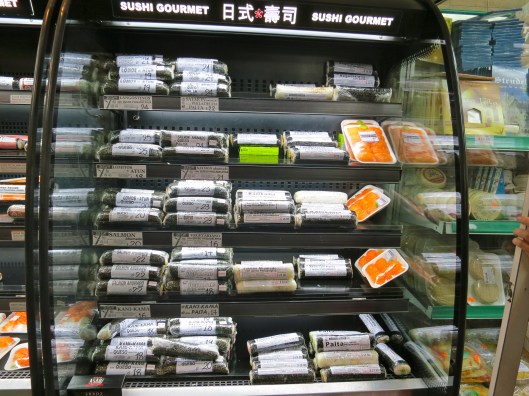
As anyone who loves raw fish and lives in Buenos Aires can attest, sushi here is generally carísimo ($$$) and often smothered in cream cheese. While there are some cream cheesy options available in Barrio Chino, these hefty rolls include the straightforward options you may be craving, and are a steal at $15 – 30 pesos a pop.

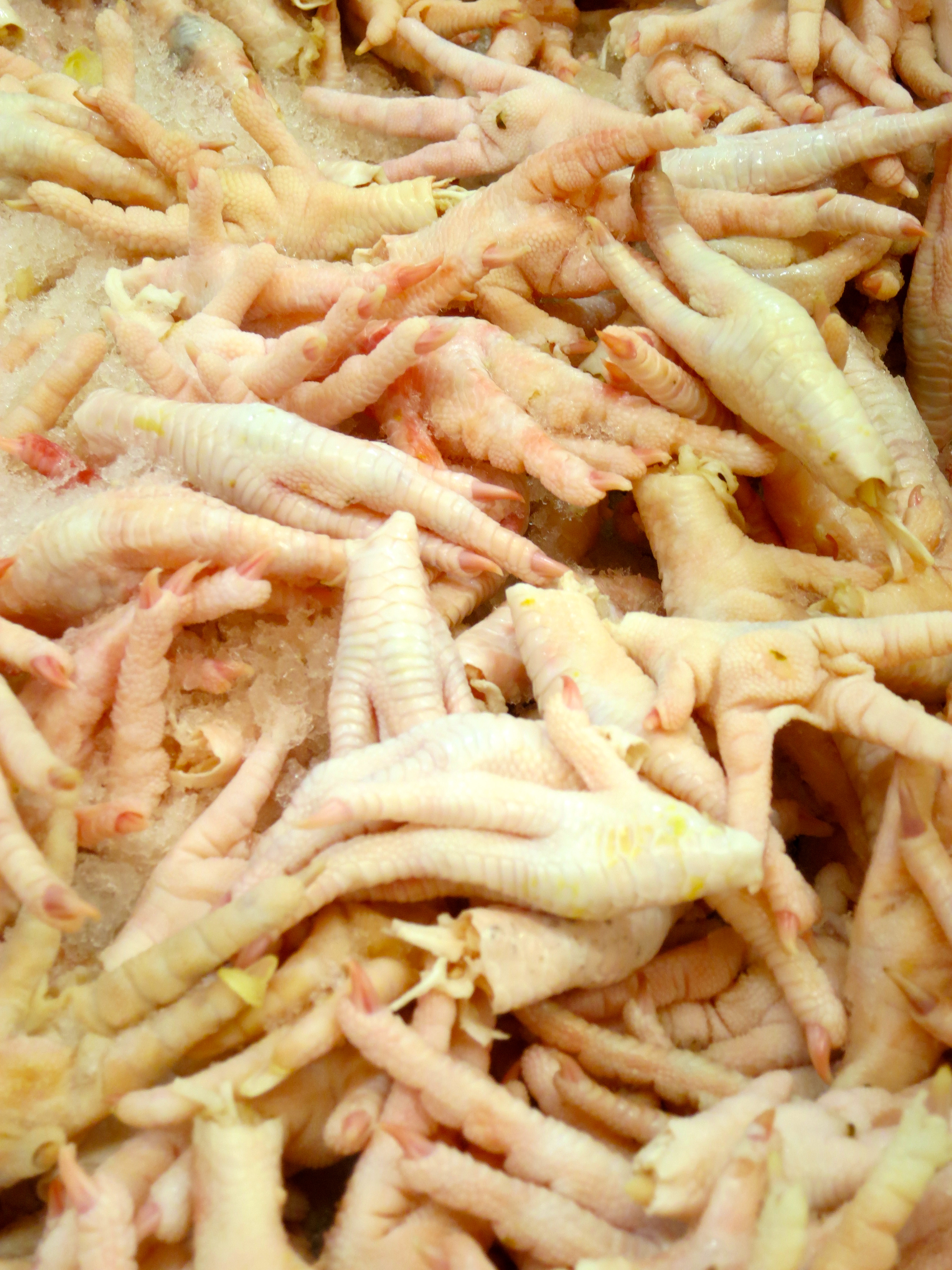
Okay, now for the sort of gross stuff. If you’re vegetarian or quick to get nauseous, chau chau, thanks for reading, now run along. As previously noted, the markets in Barrio Chino are awash with…shall we say, “interesting” smells, partly due to items for sale that the delicate norteamericano psyche may not be accustomed to. Most of the markets have what I like to call the “animal parts” section. This may range from whole chickens with their faces, feets and all wrapped in plastic, to bins full of the various parts and organs that most North Americans don’t like to think about. I’m not generally squeamish about this stuff, and plan to test out some recipes in the near future with some of these options. So if anyone’s completely grossed out or for some reason offended, I just say hey, we are eating animals. There’s no way around that, so it’s better not to be wasteful. And if you’re craving some crispy chicken feet, there’s a pile full of them just waiting to be fried up.
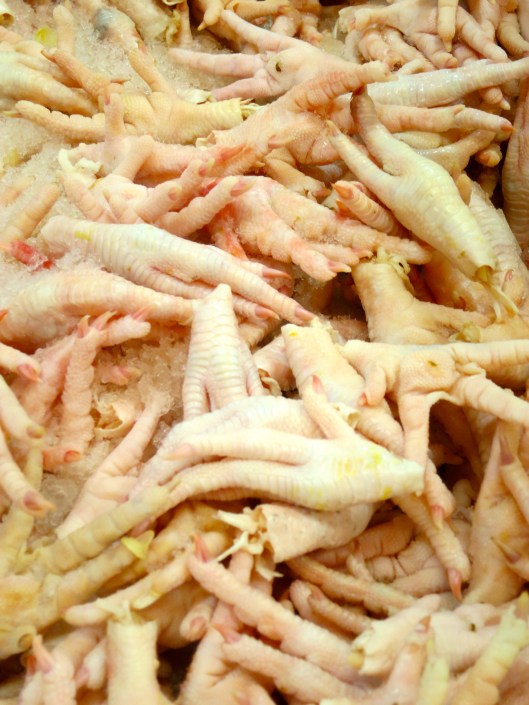
I think I just lost a few subscribers.

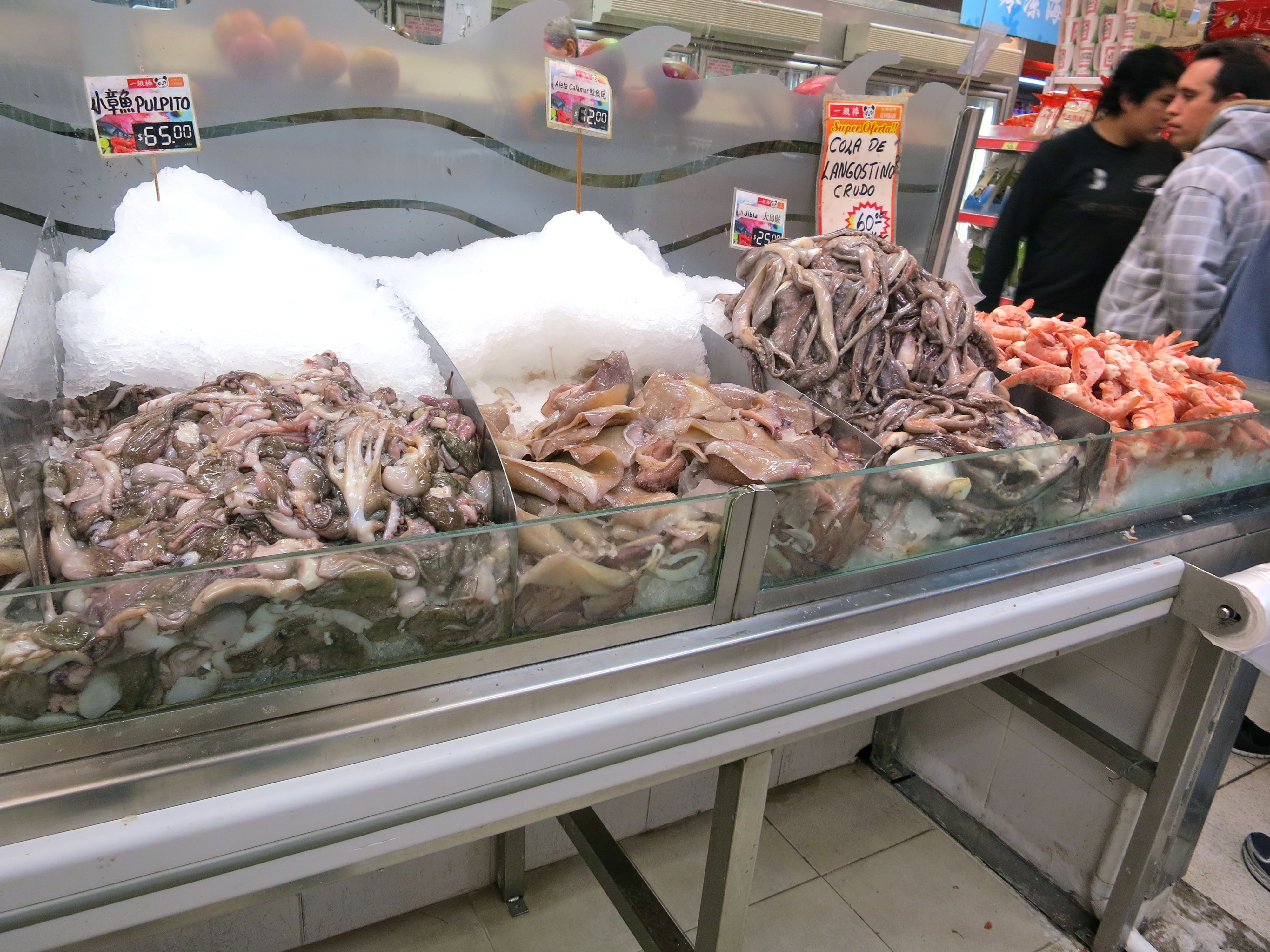
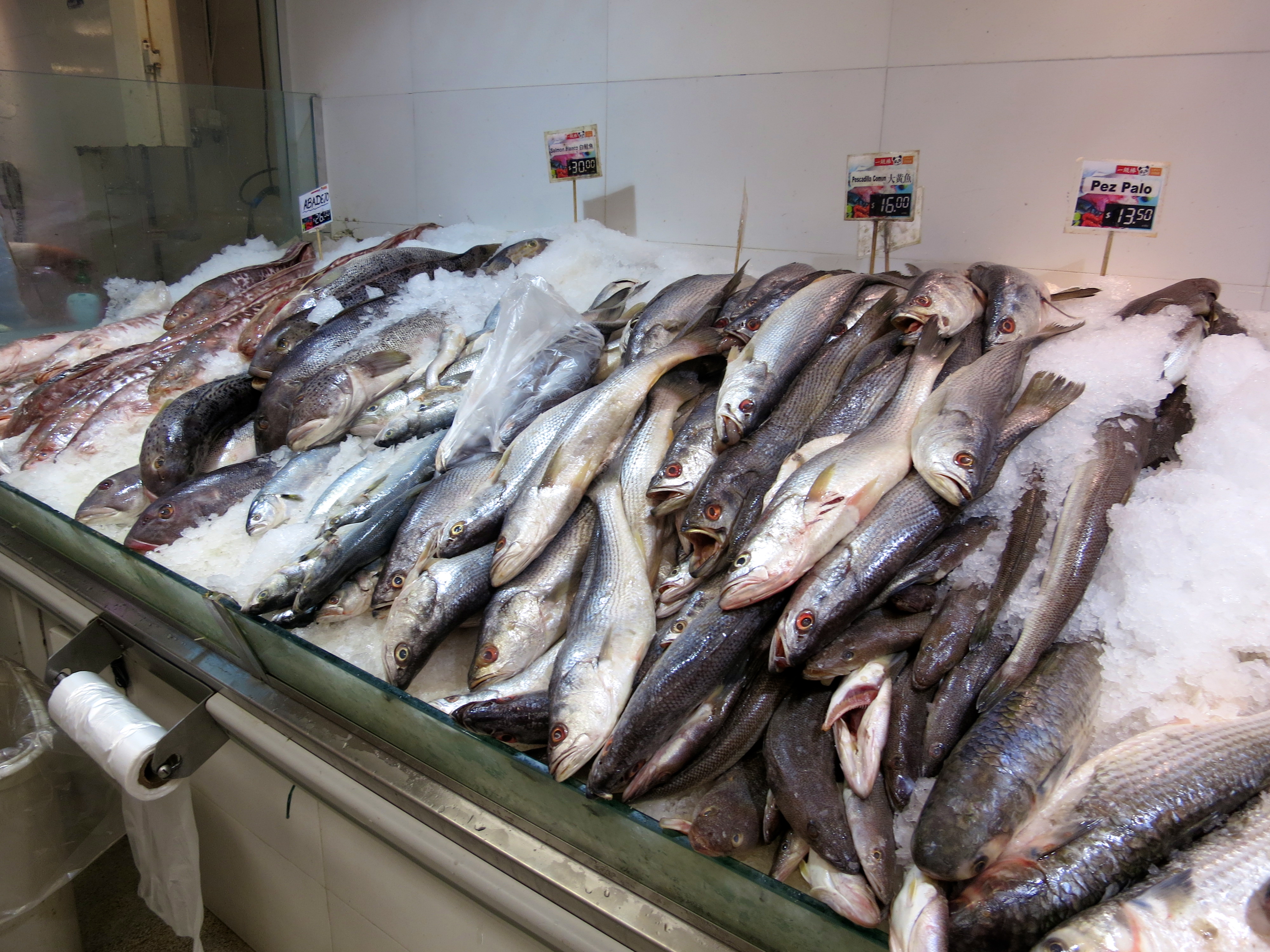
On to the seafood! Perhaps Barrio Chino’s true claim to fame, the selection of seafood is pretty outstanding. It smells like….well, let’s not dwell on that, it’s outstanding nonetheless. Despite it’s location directly on the coast, Buenos Aires is not even remotely known as a seafood-lover’s destination. In fact, finding quality seafood options can be hit-or-miss and expensive as import regulations fluctuate. It’s a mystery to me why popular options like salmon must be imported. But I’ve learned to stop asking questions. Es lo que hay.

Piles of pulpito and langostinos

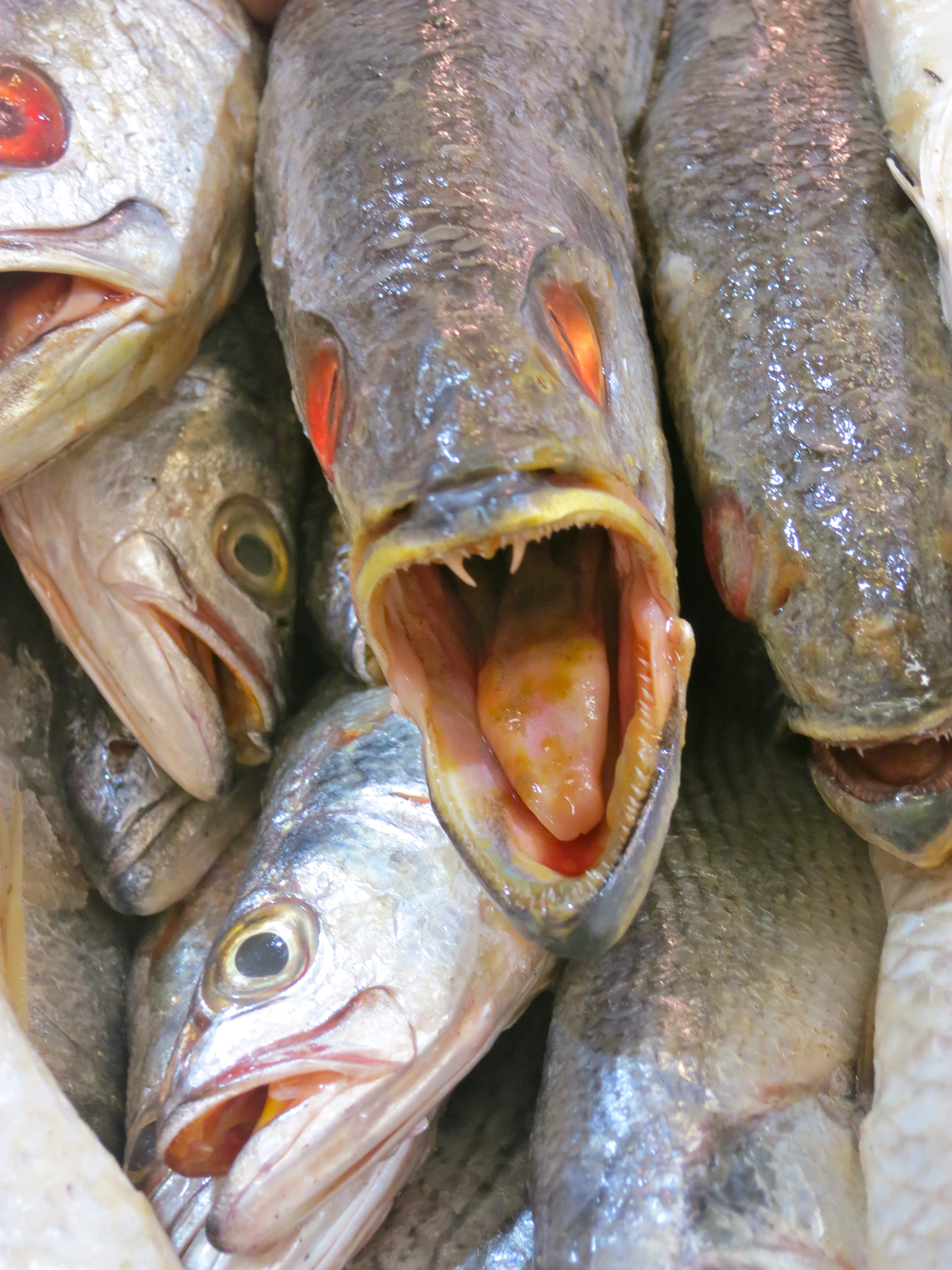
Fish have tongues? Who knew?
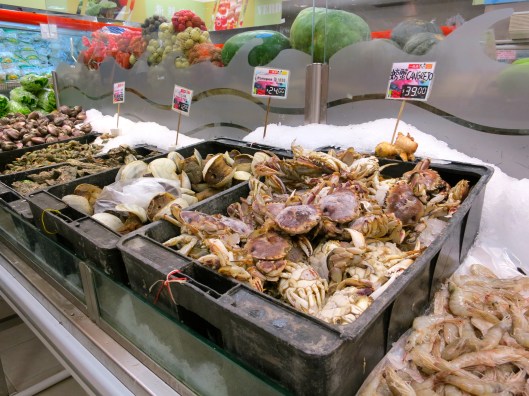
Seafood in Barrio Chino

Crabs and oysters and clams. Oh my! 

This is just a slice of what Barrio Chino has to offer, but you guys don’t need pictures of Sriracha sauce, soba and rice noodles, and coconut milk to get the picture. Suffice it to say, if you live in Buenos Aires and love flavorful food, Barrio Chino is non-negotiable. You must go. Just breathe through your mouth.
Territorio, a San Telmo Favorite

18 Monday Jun 2012

Posted by Anonymous in buenos aires, restaurants

≈ 6 Comments

Tags

Buenos Aires restaurant, picadas, San Telmo restaurant, Territorio

In most of the cities we’ve lived, we’ve been lucky to find a thriving foodie scene with tons of restaurants to try. But despite our best efforts, we’ve always failed miserably at trying them all. I blame this on the fact that we know what we like. And when you want to wile away an afternoon or evening over a bottle of wine and good food, why take a risk somewhere new only to be disappointed?
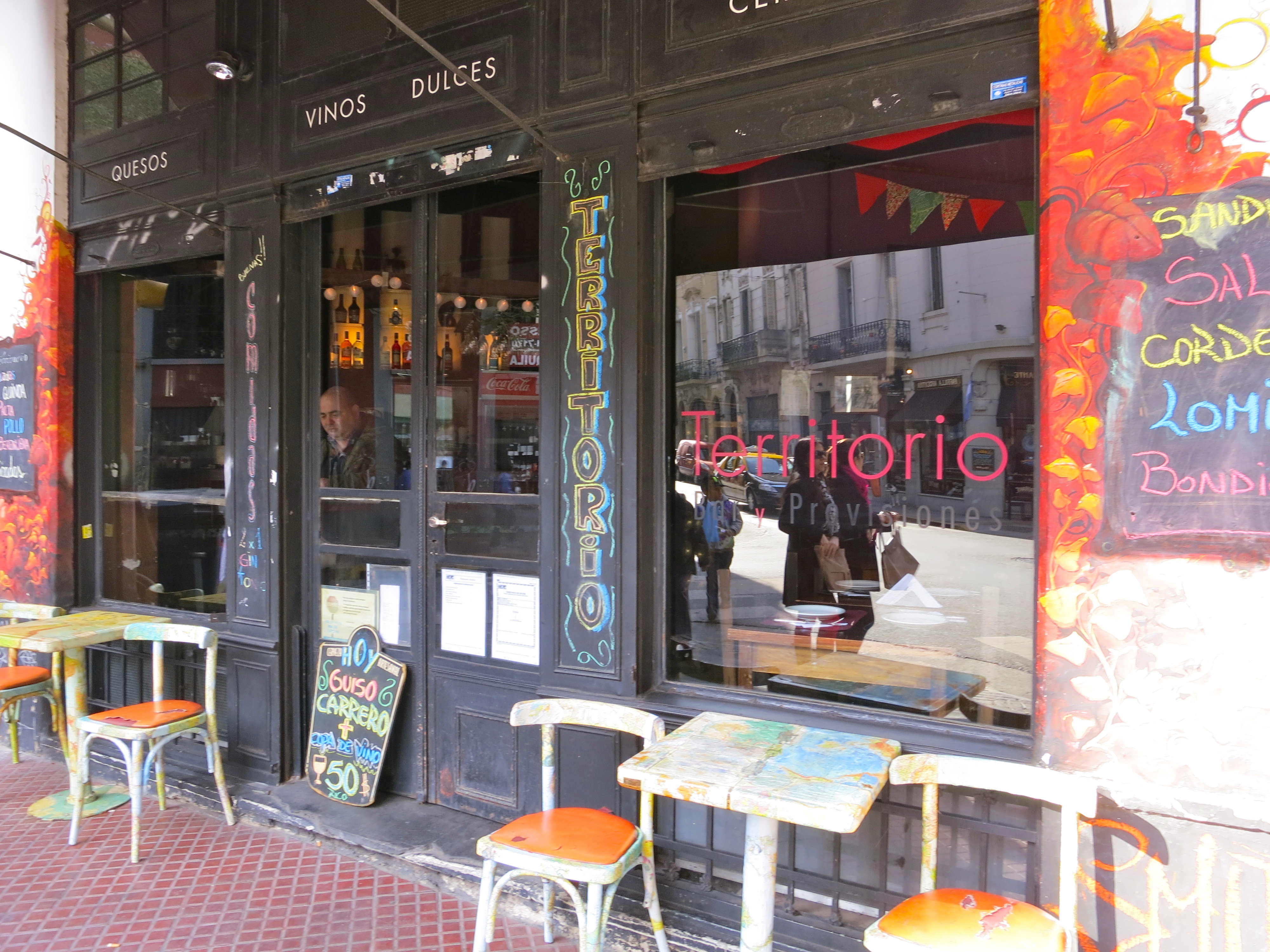
Territorio, corner of Estados Unidos and Bolivar in San Telmo

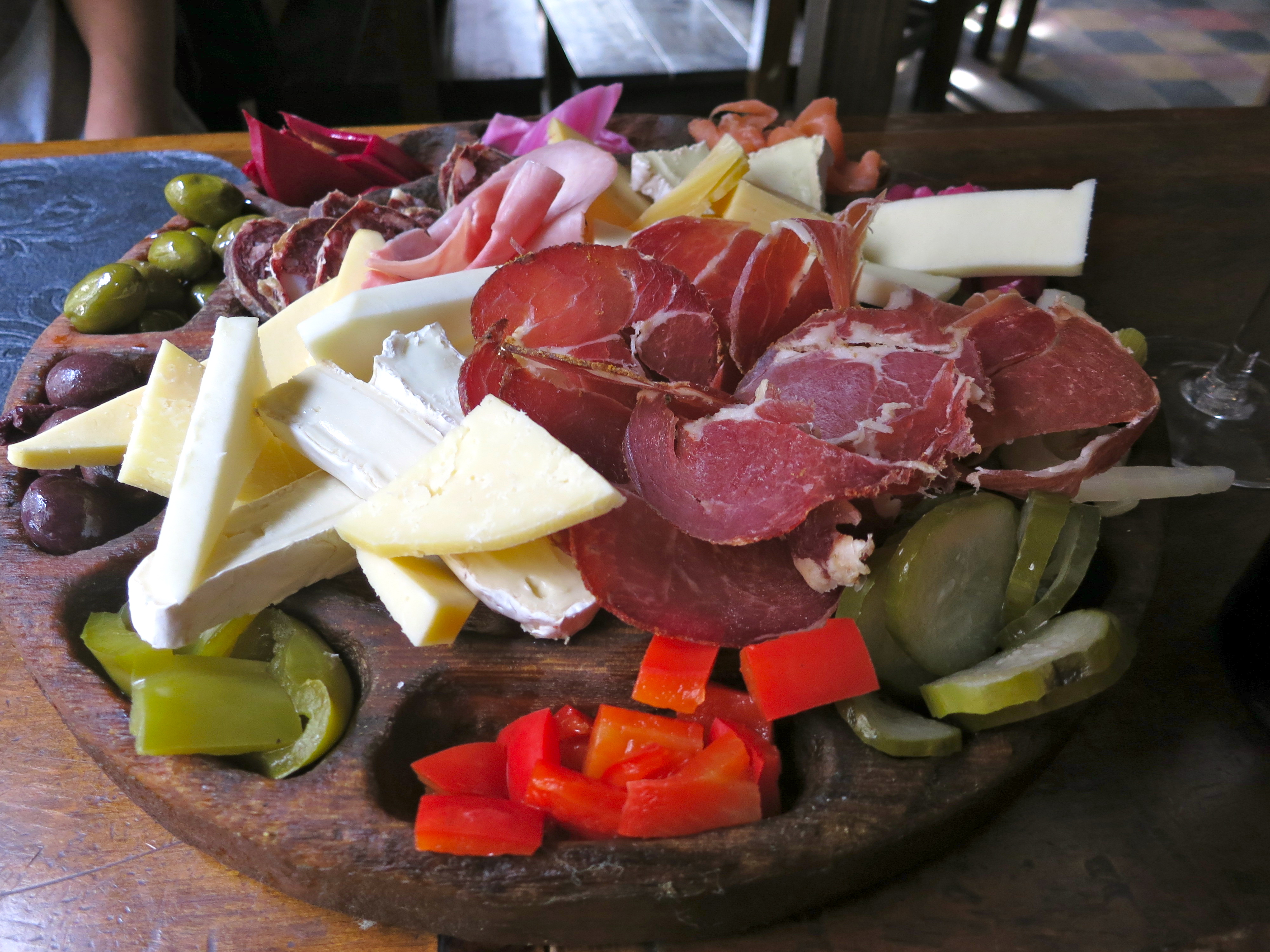
Territorio is one of those places that we know will never let us down. From the first visit, I was enamored of their tablas. Eating picadas as a meal is common in Buenos Aires. Literally translated as “bites”, picadas are generally a mix of cured meats, cheeses, olives and such. Territorio takes picadas to a whole new level of glory. As their menu promises, the tablas are “simplemente, nuestra razón de ser” — simply, our reason for being. Each tabla comes with a different and extensive mix of picadas, and can be ordered for groups of two or four to share. From experience, I’d recommend that a tabla para dos is enough for tres or more.

The Gran Tabla Territorio

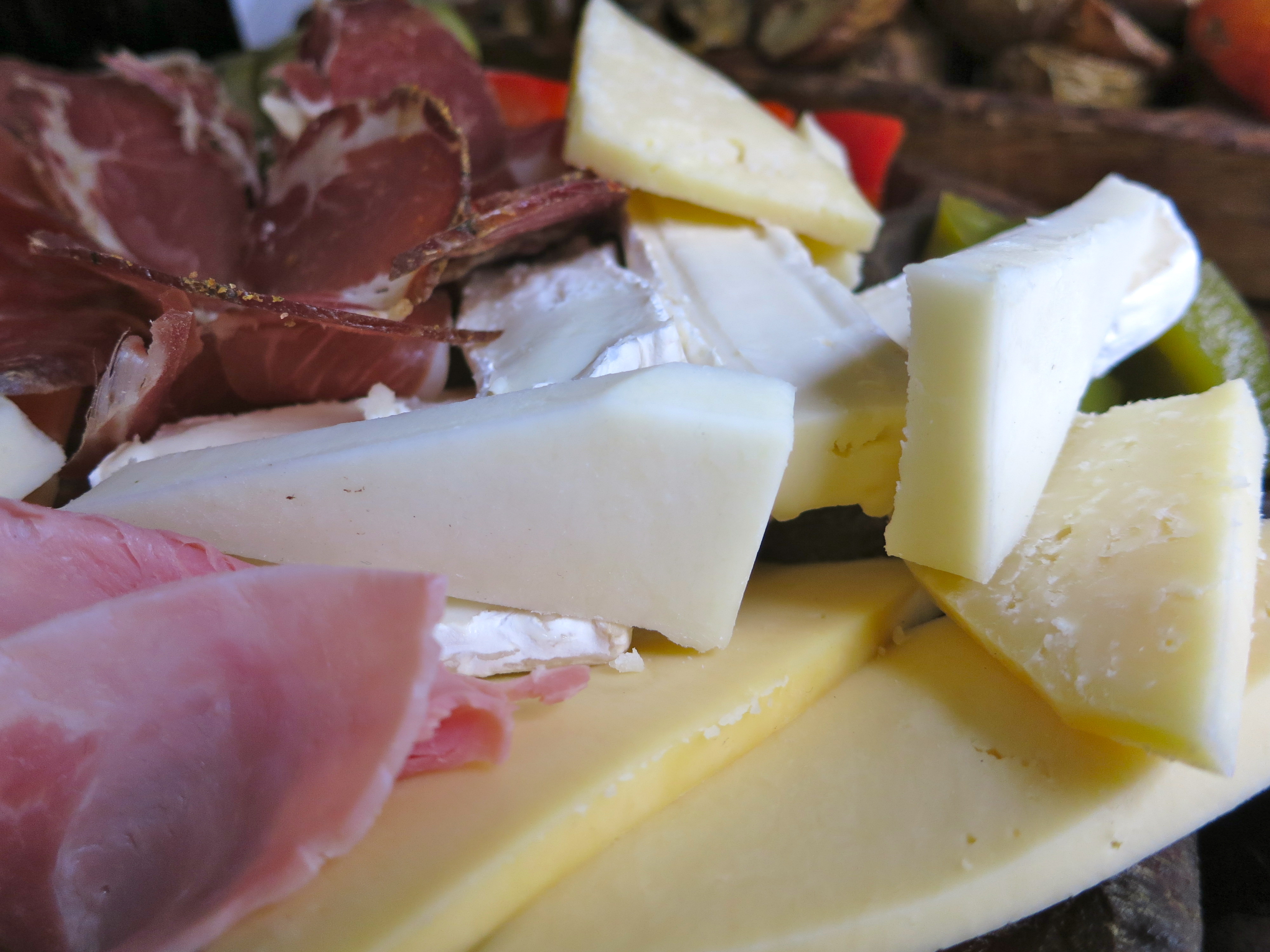
On our latest visit, we splurged on the Gran Tabla Territorio. It’s basically a little bit of everything they have to offer: smoked boar, salmon and venison, different cuts of ham and salami, six different cheeses, a huge variety of pickled vegetables, roasted potatoes, sautéed beef and mushrooms…oh, it all makes me so happy.

I’m pretty sure I could make a meal out of the cheese alone.

It’s a somewhat hidden treasure. Most days it’s not packed, just an assorted collection of regulars and tourists who’ve stumbled across it, especially on Sundays with the Fería de San Telmo in full swing a block away. The vibe is incredibly laidback. Good music. Muy buena onda. The owner’s usually around, chatting with customers, and the waitstaff’s friendly and showers attention on our boxer, Judah. She likes to come along on the weekends when we sit outside for a bottle of wine and plates of queso de cabra and patatas bravas, as she collects compliments from passersby in languages we may or may not understand.

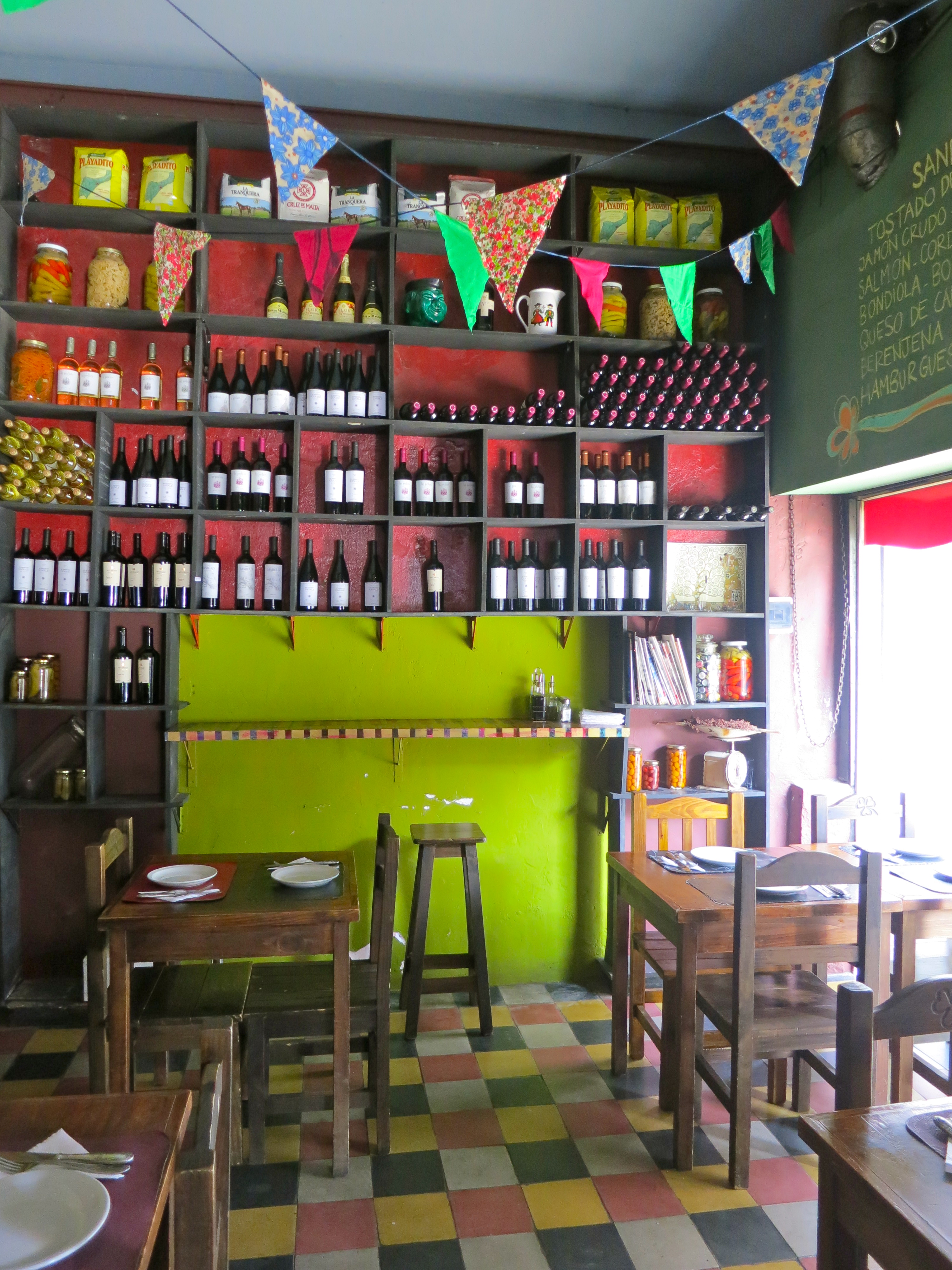
Wall to ceiling shelves stocked with wine. What’s not to love? 

If you’re ever in the neighborhood – or even if you have to trek over from Palermo – it’s definitely worth a leisurely afternoon visit.

TERRITORIO – Estados Unidos 500 (esq. Bolivar) in San Telmo

Read reviews on Guia Oleo. 

← Older posts
Newer posts →

Enter your email address to subscribe to this blog and receive notifications of new posts by email.

Join 118 other subscribers

One Day Cafe on Facebook

One Day Cafe on Facebook

algarrobo antofagasta appetizers and sides argentina brazil breakfast and brunch buenos aires chile desserts drinks ecuador entrees etiquette food trends france lima los órganos mendoza north carolina peru pittsburgh recipes restaurants san pedro de atacama tips & how to's travel Uncategorized uruguay

katrina’s twitter feed

Tweets by katrinacabrera

Blogroll

  • David Lebovitz
  • Gringo in Buenos Aires
  • Homesick Texan
  • Kelly Poindexter – Pastelera
  • La Panza Porteña
  • My Beautiful Air
  • NOLAchef
  • Pick Up the Fork
  • San Telmo Loft
  • Smitten Kitchen

On Bloglovin’? Follow Me Here!

Follow on Bloglovin

Blog at WordPress.com.

  • Subscribe Subscribed
    • One Day Café
    • Join 118 other subscribers
    • Already have a WordPress.com account? Log in now.
    • One Day Café
    • Subscribe Subscribed
    • Sign up
    • Log in
    • Report this content
    • View site in Reader
    • Manage subscriptions
    • Collapse this bar
 

Loading Comments...